The Story Behind My Southern Peach Cobbler (Brace Yourself for Nostalgia)
Alright, listen—I cannot even smell peaches without thinking about long, muggy summers at my Aunt Lou’s place in Georgia. She always made the flakiest, juiciest, most unapologetically sweet Peach Cobbler in a dish that had seen better days (I swear, she called it her “lucky pan”—and, honestly, the corners were so dented you could spot it from the porch). Her secret? She never rushed a darn thing…and sometimes she’d shoo us out of the kitchen for sneaking tastes straight form the bowl. I’ve been chasing that exact cobbler flavor ever since—not sure I’ve nailed it, but hey, this version tastes like home to me.
Why You’ll Love This Cobbler (Spoiler: It’s Real Good)
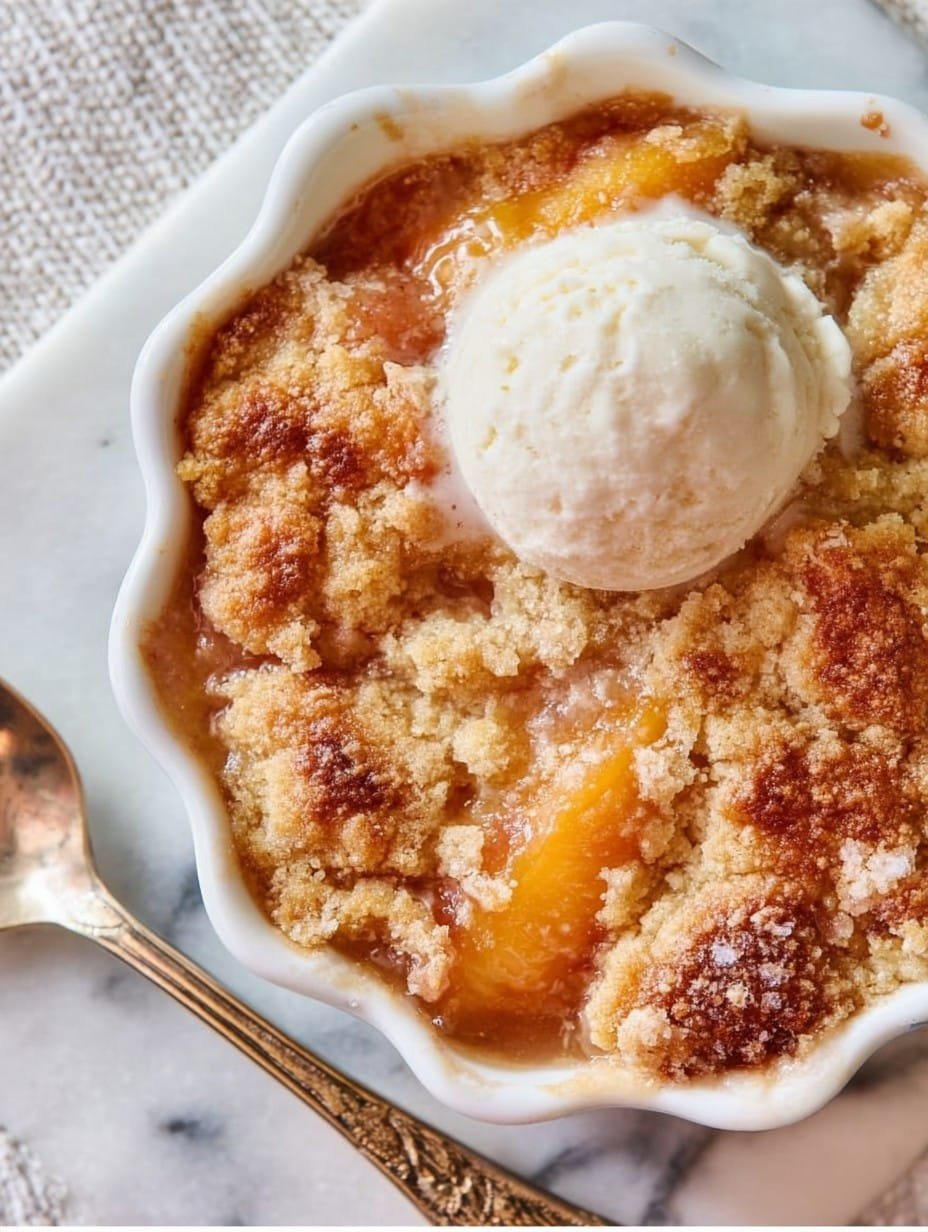
I whip this up when summer peaches spill out of the farmers’ market crates, or honestly, even in January when I need a bite of summer (canned works, in a pinch—nobody’s judging). My family goes absolutely bonkers over this because the crust soaks up those buttery peach juices and forms a sort of magic—plus, there’s almost always a crust thief lurking nearby, looking to ruin my perfect edges. If you’ve ever been annoyed by bland cobbler or dry topping, this is your jam (or, er, cobbler). That weird soupy bit right out of the oven? Embrace it! It thickens up, promise.
My Go-To Ingredients List (With a Few Tangents)
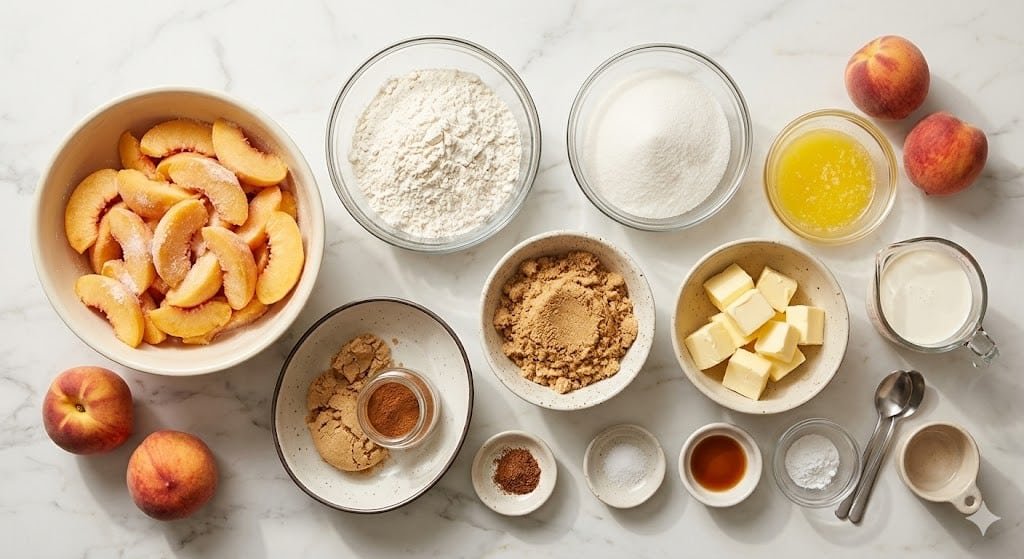
- 6 large peaches, sliced (or 2 big cans of peaches in juice, drained—not syrup; honestly, sometimes I just use what’s in the pantry if I forgot fresh)
- 1 cup white sugar (sometimes I swap half for brown sugar for a deeper thing—my grandmother would probably judge me for this, but it works)
- 1/2 cup unsalted butter (melted; salted butter is fine if you want a little extra oomph)
- 1 cup all-purpose flour (Gluten-free flour works too, but it gets a slightly different texture—can’t say I don’t miss the classic chew though)
- 2 teaspoons baking powder
- 1/4 teaspoon salt (a pinch more if you’re a salty-sweet fan like me)
- 3/4 cup milk (I use whole milk, but honestly, I’ve used oat milk when that’s all I’ve got—still tasty)
- 1 teaspoon vanilla extract (if you forget this, it’ll still taste good. Promise.)
- 1/2 teaspoon ground cinnamon (sometimes I go wild and add 1/4 teaspoon nutmeg when I’m feeling fancy)
- Juice of half a lemon (totally optional, but it brightens things up)
How I Make Southern Peach Cobbler: Step by Wobbly Step
- Preheat your oven to 350°F (or 175°C, for the metric folks—I always have to check my oven dial twice and still mess it up occasionally).
- Get your peaches in a big bowl. If using fresh, toss ‘em with the lemon juice, half the sugar, and all that cinnamon (and a little nutmeg if you’re wild). Canned? Just drain and mix with the sugar and spices. Set aside to get all juicy—it’s fine if they look a bit soggy; that’s sort of the point.
- Grab your baking dish—I use an 8×8 ‘lucky pan’, but a cake pan or whatever you have lying around works. Add the melted butter straight to the dish. No, you do not need to grease it first (it’s already buttery, right?).
- In another bowl, mix the flour, baking powder, salt, remaining sugar, and then pour in the milk and vanilla. Stir just until combined—not too much or it’ll get tough. The batter will look lumpy and kind of weird. That’s good!
- Pour the batter over the melted butter in your baking dish. Don’t stir! I know it feels wrong. It’ll float up around the fruit as it bakes (kitchen magic, basically).
- Spoon your peach mixture (with all the juices) right on top of the batter. Do not mix. Seriously, resist that urge (trust me on this one; I’ve ruined a cobbler by over-stirring).
- Bake, uncovered, for about 42-50 minutes—until the top is golden brown and crispy around the edges (if it bubbles up like a lava lamp, it’s doing its thing). I usually start peeking at 40 minutes. If you get a little too much browning, just cover loosely with foil for the last bit.
- Let it cool for at least 15 minutes before diving in. It will look way too runny at first, but it’ll thicken (if you can actually wait—good luck with that…)
Notes from My Many Oops Moments
- I’ve used peaches that were on their last legs—still turned out amazing. Actually, overripe is best in my opinion.
- If you forget the vanilla (which I do, once a year), it tastes a touch less floral but is still great. Don’t panic.
- Once I dumped in way too much cinnamon and… well, kids still ate it, but maybe stick with a light hand unless you LOVE spice.
Variations I’ve Tried (and a Goof-Up Confession)
- Swapped in blackberries for half the peaches: totally works if you’re a ‘fruity’ type.
- Messed around with almond extract instead of vanilla—tasty, but go easy, almond is strong. Yikes.
- Tried a biscuit topping once. Flaky, but honestly? Not for me. The classic batter is just better, at least for cobbler. But you do you!
- Added a splash of bourbon to the peaches as an “experiment”—big hit with adults, kids not so much. Maybe skip it for family dinner.
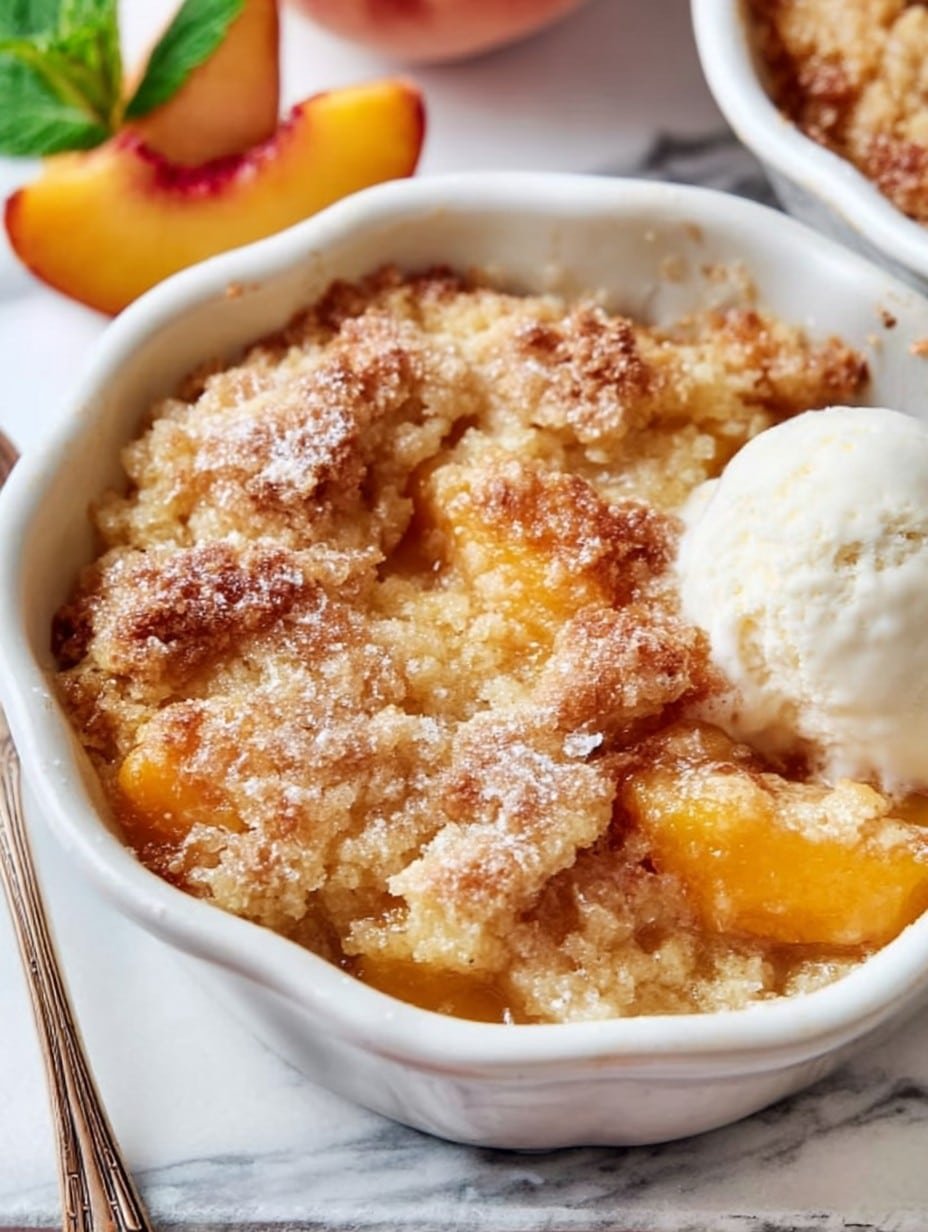
If You Don’t Have a Fancy Baking Dish (No Sweat)
I’ve baked this in a cheap foil pan at a picnic and once—don’t laugh—in a deep skillet when nothing else was clean. It’s not fussy. Only thing I’d avoid is glass if you’re prone to banging things around (like me). Oh, and I once used a Dutch oven on a camping trip (long story, involved raccoons), but that’s a tale for another day!
Storage: The Real Life Truth
Supposedly this keeps for 3 days in the fridge, covered tightly, but honestly, it’s never stuck around that long at my place. You can rewarm it gently in the microwave. Actually, I prefer it slightly cold the next morning with coffee. Is that weird?
How We Serve It (And Why I Love It That Way)
I’d suggest scooping big, messy helpings into bowls. Then top with vanilla ice cream (absolute requirement if you ask my dad), or sometimes a splash of cold cream. My cousin dumps a little extra cinnamon sugar on top, and honestly… it’s not a bad move. On second thought, maybe try it!
Pro Tips I Learned the Hard Way
- I once tried rushing the cooling step and regretted it—cobbler soup, anyone?
- Over-mixing the batter makes it tough. Resist the urge!
- If you use canned peaches, make sure to drain well or it gets watery (but not the end of the world—it just needs a few minutes more to firm up).
People Usually Ask Me:
- Can I use frozen peaches?
- Yep, just thaw first and drain a bit, otherwise you’ll get extra liquid. Actually, frozen works better than canned, IMHO.
- What if I don’t have vanilla?
- Skip it, or use almond or even orange extract if you’re feeling adventurous. Or nothing! Still delicious.
- Does this freeze well?
- Eh, it’s okay—not amazing. The crust changes texture a bit. If you do, wrap tightly and rewarm in oven not microwave for best shot.
- How do you get the top so crispy?
- Butter, and not over-mixing. Sometimes I throw a sprinkle of raw sugar at the end if I remember.
- Is this like a pie?
- Nope. Think softer, more spoonable—somewhere between cake and fruit stew. But way easier than pie, too. Trust me.
Ingredients
- 6 large peaches, sliced (or 2 big cans of peaches in juice, drained—not syrup; honestly, sometimes I just use what’s in the pantry if I forgot fresh)
- 1 cup white sugar (sometimes I swap half for brown sugar for a deeper thing—my grandmother would probably judge me for this, but it works)
- 1/2 cup unsalted butter (melted; salted butter is fine if you want a little extra oomph)
- 1 cup all-purpose flour (Gluten-free flour works too, but it gets a slightly different texture—can’t say I don’t miss the classic chew though)
- 2 teaspoons baking powder
- 1/4 teaspoon salt (a pinch more if you’re a salty-sweet fan like me)
- 3/4 cup milk (I use whole milk, but honestly, I’ve used oat milk when that’s all I’ve got—still tasty)
- 1 teaspoon vanilla extract (if you forget this, it’ll still taste good. Promise.)
- 1/2 teaspoon ground cinnamon (sometimes I go wild and add 1/4 teaspoon nutmeg when I’m feeling fancy)
- Juice of half a lemon (totally optional, but it brightens things up)
Instructions
-
1Preheat your oven to 350°F (or 175°C, for the metric folks—I always have to check my oven dial twice and still mess it up occasionally).
-
2Get your peaches in a big bowl. If using fresh, toss ‘em with the lemon juice, half the sugar, and all that cinnamon (and a little nutmeg if you’re wild). Canned? Just drain and mix with the sugar and spices. Set aside to get all juicy—it’s fine if they look a bit soggy; that’s sort of the point.
-
3Grab your baking dish—I use an 8×8 ‘lucky pan’, but a cake pan or whatever you have lying around works. Add the melted butter straight to the dish. No, you do not need to grease it first (it’s already buttery, right?).
-
4In another bowl, mix the flour, baking powder, salt, remaining sugar, and then pour in the milk and vanilla. Stir just until combined—not too much or it’ll get tough. The batter will look lumpy and kind of weird. That’s good!
-
5Pour the batter over the melted butter in your baking dish. Don’t stir! I know it feels wrong. It’ll float up around the fruit as it bakes (kitchen magic, basically).
-
6Spoon your peach mixture (with all the juices) right on top of the batter. Do not mix. Seriously, resist that urge (trust me on this one; I’ve ruined a cobbler by over-stirring).
-
7Bake, uncovered, for about 42-50 minutes—until the top is golden brown and crispy around the edges (if it bubbles up like a lava lamp, it’s doing its thing). I usually start peeking at 40 minutes. If you get a little too much browning, just cover loosely with foil for the last bit.
-
8Let it cool for at least 15 minutes before diving in. It will look way too runny at first, but it’ll thicken (if you can actually wait—good luck with that…)
Approximate Information for One Serving
Nutrition Disclaimers
Number of total servings shown is approximate. Actual number of servings will depend on your preferred portion sizes.
Nutritional values shown are general guidelines and reflect information for 1 serving using the ingredients listed, not including any optional ingredients. Actual macros may vary slightly depending on specific brands and types of ingredients used.
To determine the weight of one serving, prepare the recipe as instructed. Weigh the finished recipe, then divide the weight of the finished recipe (not including the weight of the container the food is in) by the desired number of servings. Result will be the weight of one serving.
Did you make this recipe?
Please consider Pinning it!