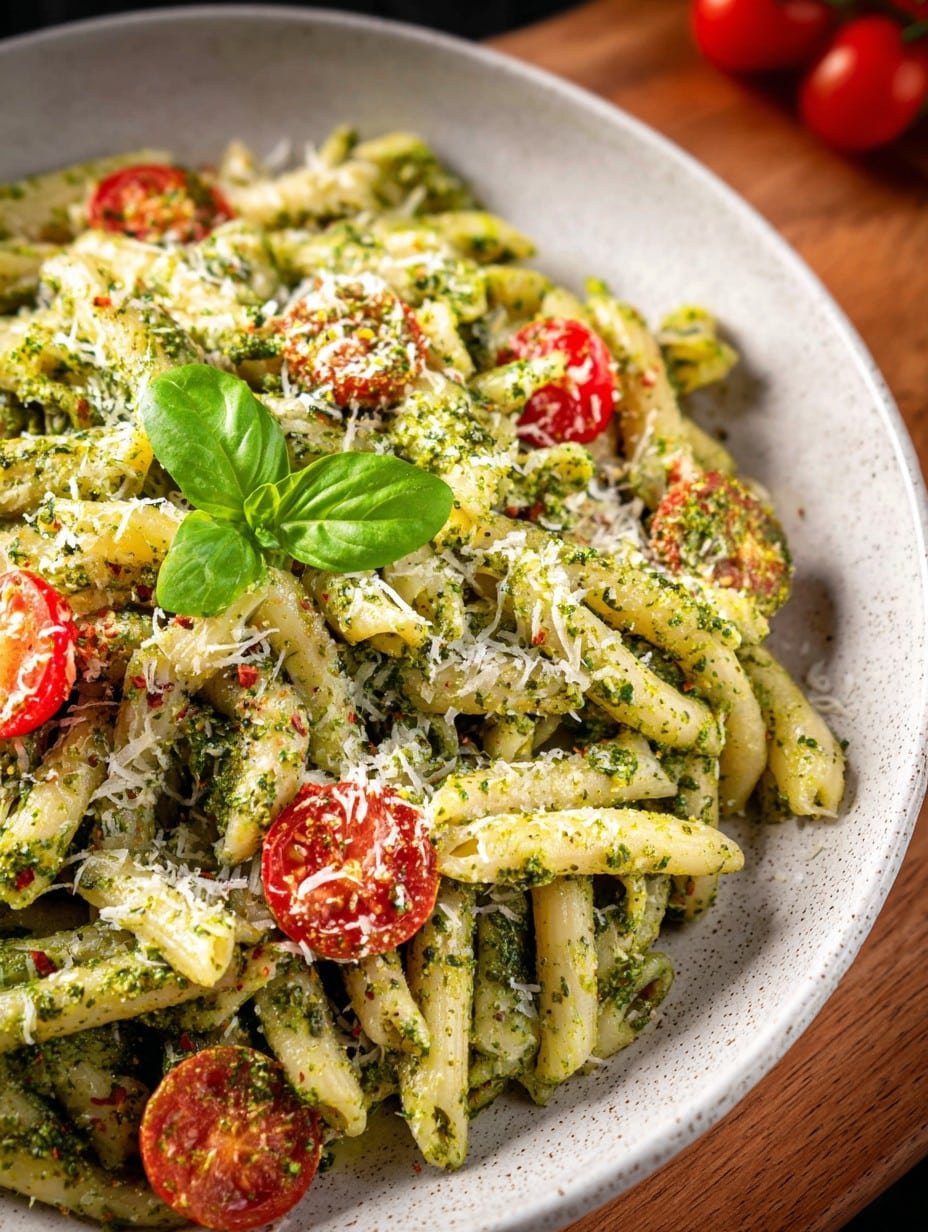
If you’ve ever craved something green and a little bit fancy (but not too much effort), this pesto pasta recipe is my secret weapon. I actually started making it in college, mostly because it meant fewer pots to wash (ugh, dish duty). Now it’s the dish I always throw together when I want to look like I tried harder than I actually did—plus, it reminds me of lazy summer evenings at my gran’s house, where her whole herb garden was the pesto factory. And, let’s be honest, her food processor was a bit possessed, making wild noises, but it got the job done.
Why You’ll Love This Pasta (According to Me)
I make this when it feels like “let’s eat something nice, but also fast.” My family goes nuts for the basil scent (unlike the time I tried to sneak spinach in—never again, trust me). It’s great for last-minute guests or carb emergencies, and I actually like it cold the next day for lunch. Oh, and pesto covers a multitude of sins if you slightly overcook the pasta (don’t ask me how I know—oops). Sometimes the kitchen smells so good my dog sits next to the stove. No idea what that says about my cooking!
Here’s What You’ll Need (and What Gran Would Say)
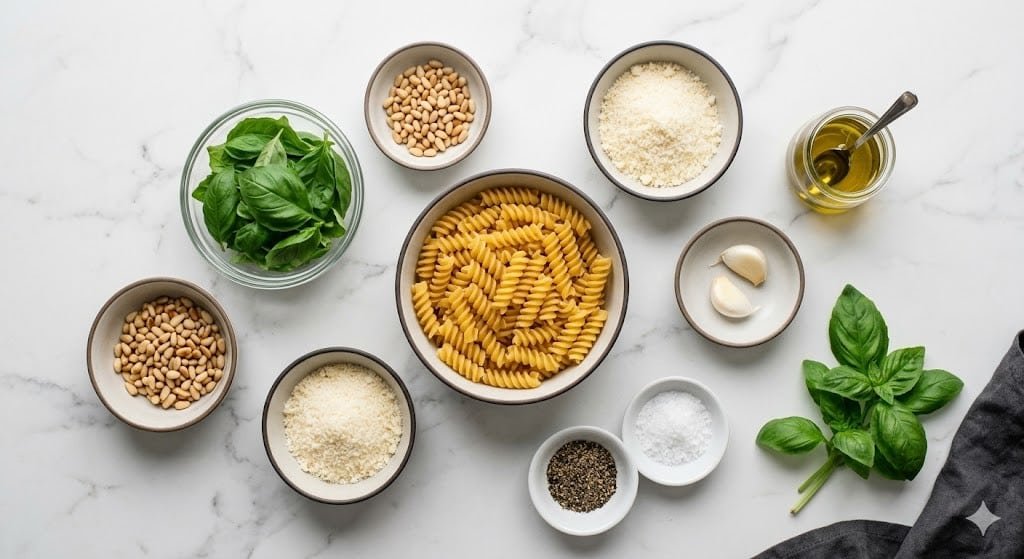
- 400g dried pasta (penne, spaghetti, or whatever’s rattling around at the back of your cupboard—once used fusilli out of desperation, no regrets)
- 2 packed cups fresh basil leaves (but I sometimes use half basil, half baby spinach if I’m running short—gran may haunt me for this)
- 1/3 cup pine nuts (walnuts work if pine nuts seem criminally expensive. I even tried almonds once. Not bad, actually)
- 2-3 garlic cloves, peeled (my mate uses the pre-chopped stuff, but it’s not quite the same, is it?)
- 1/2 cup good olive oil (I wouldn’t lose sleep if you use the everyday stuff—no need to remortgage)
- 1/2 cup grated Parmesan cheese (or Grana Padano—truthfully, the green can will work in an emergency. Don’t tell the Italians)
- Salt and pepper, to taste (I always go a bit easy on the salt at first, easier to add than remove)
- Juice of 1/2 a lemon (this is optional, but I quite like the brightness)
- A handful of cherry tomatoes or cooked chicken—totally optional add-ins for when you want to stretch it
How I Actually Make Pesto Pasta (Don’t Stress the Order)
- Boil the pasta in a big pot of salty water, like the sea. Not just a sprinkle—really get it salty. Cook it until it’s just al dente (taste a bit to make sure, and if you drop a noodle on the floor, you’re officially part of the club).
- While that’s going, bung your basil, pine nuts, and garlic into a food processor. Blitz it a few times. It’ll look a bit like a green mulch; that’s fine.
- Slowly drizzle in the olive oil as the processor is running. If you forget to drizzle and dump it all in at once (which I absolutely do sometimes), just keep going. It’ll emulsify, promise.
- Add the Parmesan, salt, pepper, and lemon juice. Blitz again. Then, this is where I stick in a finger to taste it (probably unhygienic, tasty though). Adjust if something’s off—more salt, more cheese, you decide.
- Drain the pasta, but save a mugful of that starchy water. (Don’t skip this; I have, and the pasta ends up sticky instead of glossy.)
- Toss the hot pasta with your pesto in a big bowl, adding a splash of the pasta water until it’s silky and coats everything. Don’t worry if it looks too thin at first—it thickens as it cools.
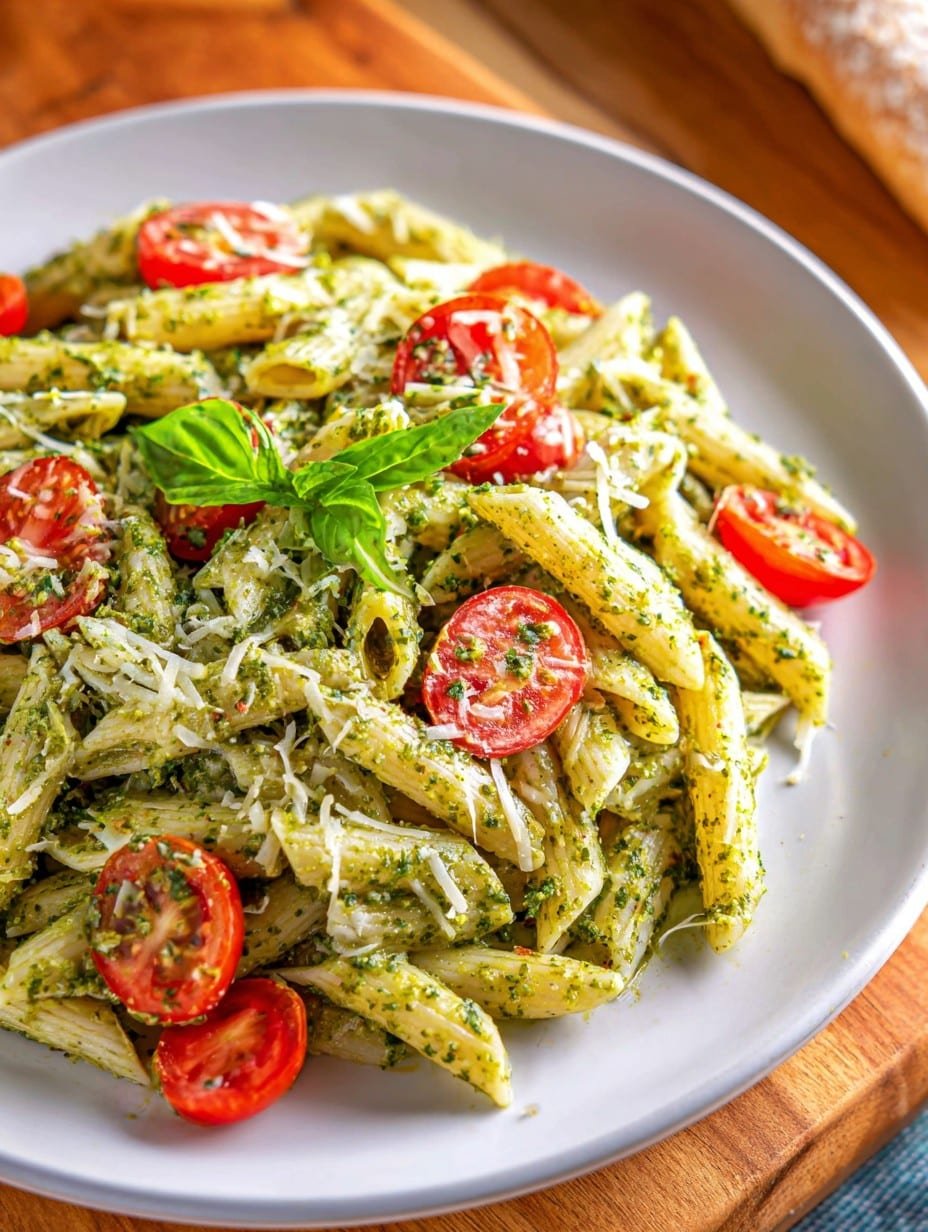
- If you feel like it, throw in some cherry tomatoes or chicken for a bit of color or protein. But honestly, it’s great as is.
- Serve with a bit more cheese on top and a grind of fresh pepper. I always forget, but some fresh basil scattered over makes you look like you know what you’re doing.
Notes from My ~Very~ Cluttered Kitchen
- If you don’t have a food processor, a blender works, but you might need to scrape down the sides a few times. I once tried doing it with a mortar and pestle for “authenticity”—ouch, my arms.
- The lemon juice isn’t traditional, but it sort of wakes everything up—try it at least once.
- Sometimes I add a splash more oil if it looks too thick. If it looks split, just stir hard, it’ll come together.
If You Want to Mix It Up (Results May Vary…)
- Arugula (rocket) instead of basil: strong flavor, kind of peppery, I like it but my husband thought it tasted like lawn clippings. You’ve been warned.
- Vegan version: skip the cheese, add a tablespoon of nutritional yeast. Not quite the same but still decent.
- Once tried pesto with sun-dried tomato blended in—it was odd, like pasta was trying to be a pizza. Not for me, but maybe you’ll dig it?
You Don’t Need Fancy Gadgets (But They Help)
Food processor makes it speedy, sure, but even a hand blender will do in a pinch. Or, grab a pestle and mortar and channel your inner strongwoman/man. Or use a bowl and just chop everything super fine—extra points for stubbornness.
Can You Store Pesto Pasta? (Ha, Good Luck!)
Technically, it’ll keep in the fridge in an airtight container for 2-3 days—though honestly, in my house it never lasts more than a day! The pesto might darken a bit (oxidation and all that jazz), but it’s still tasty. If it seems too thick after chilling, add a splash of water or oil before reheating.
Serving—Do I Even Need to Say?
Big bowls, warm, with extra Parmesan or even a little lemon zest on top. At my place, we eat this with a crusty heel of bread and sometimes, if we’re feeling posh, a green salad. My cousin always snags the leftovers for lunch the next day. Fair’s fair, I suppose.
Honestly Useful Tips (Learned the Messy Way)
- Don’t rush the oil drizzling if you want a really creamy sauce—once I dumped it all in fast and ended up with a weird, separated pesto soup. Not ideal.
- Don’t rinse your pasta—pasta water actually helps the sauce cling on!
- Taste before adding extra salt; Parmesan is salty enough on it’s own, and I made it borderline inedible one time, oops.
FAQ—They’ve Actually Asked Me These
- Can I make pesto in advance? Yup! Keeps in a jar in the fridge for up to a week, just cover it with a slick of oil. Or freeze it in ice cube trays for later—handy when you just want a spoonful.
- What if I don’t have pine nuts? Walnuts, almonds, even unsalted pistachios work. Don’t use peanuts (tried it; not my best day).
- Is it okay if my pesto isn’t bright green? It happens! Sometimes the basil just isn’t that vibrant. It’ll still taste top-notch.
- Can I use dried basil? Erm, wouldn’t recommend it for pesto; the flavor’s just not right. Fresh is really kind of essential here.
- Can this be made gluten free? Just swap in your favorite gluten free pasta—easy as that.
Ingredients
- 400g dried pasta (penne, spaghetti, or whatever’s rattling around at the back of your cupboard—once used fusilli out of desperation, no regrets)
- 2 packed cups fresh basil leaves (but I sometimes use half basil, half baby spinach if I’m running short—gran may haunt me for this)
- 1/3 cup pine nuts (walnuts work if pine nuts seem criminally expensive. I even tried almonds once. Not bad, actually)
- 2-3 garlic cloves, peeled (my mate uses the pre-chopped stuff, but it’s not quite the same, is it?)
- 1/2 cup good olive oil (I wouldn’t lose sleep if you use the everyday stuff—no need to remortgage)
- 1/2 cup grated Parmesan cheese (or Grana Padano—truthfully, the green can will work in an emergency. Don’t tell the Italians)
- Salt and pepper, to taste (I always go a bit easy on the salt at first, easier to add than remove)
- Juice of 1/2 a lemon (this is optional, but I quite like the brightness)
- A handful of cherry tomatoes or cooked chicken—totally optional add-ins for when you want to stretch it
Instructions
-
1Boil the pasta in a big pot of salty water, like the sea. Not just a sprinkle—really get it salty. Cook it until it’s just al dente (taste a bit to make sure, and if you drop a noodle on the floor, you’re officially part of the club).
-
2While that’s going, bung your basil, pine nuts, and garlic into a food processor. Blitz it a few times. It’ll look a bit like a green mulch; that’s fine.
-
3Slowly drizzle in the olive oil as the processor is running. If you forget to drizzle and dump it all in at once (which I absolutely do sometimes), just keep going. It’ll emulsify, promise.
-
4Add the Parmesan, salt, pepper, and lemon juice. Blitz again. Then, this is where I stick in a finger to taste it (probably unhygienic, tasty though). Adjust if something’s off—more salt, more cheese, you decide.
-
5Drain the pasta, but save a mugful of that starchy water. (Don’t skip this; I have, and the pasta ends up sticky instead of glossy.)
-
6Toss the hot pasta with your pesto in a big bowl, adding a splash of the pasta water until it’s silky and coats everything. Don’t worry if it looks too thin at first—it thickens as it cools.
-
7If you feel like it, throw in some cherry tomatoes or chicken for a bit of color or protein. But honestly, it’s great as is.
-
8Serve with a bit more cheese on top and a grind of fresh pepper. I always forget, but some fresh basil scattered over makes you look like you know what you’re doing.
Approximate Information for One Serving
Nutrition Disclaimers
Number of total servings shown is approximate. Actual number of servings will depend on your preferred portion sizes.
Nutritional values shown are general guidelines and reflect information for 1 serving using the ingredients listed, not including any optional ingredients. Actual macros may vary slightly depending on specific brands and types of ingredients used.
To determine the weight of one serving, prepare the recipe as instructed. Weigh the finished recipe, then divide the weight of the finished recipe (not including the weight of the container the food is in) by the desired number of servings. Result will be the weight of one serving.
Did you make this recipe?
Please consider Pinning it!