Alright, confession right off the bat: the first time I tried making this pesto sourdough focaccia, I accidentally dropped half the pesto on the floor (RIP green carpet). So if you’re mildly clumsy like me, maybe keep a tea towel nearby for disasters. But honestly, this recipe is now my go-to comfort bake—I can’t smell fresh basil without thinking of that one time my cousin hid in my kitchen just to snag the crispy edge pieces before anyone else. Kind of rude, but also a compliment?
Why I’m Obsessed With This Focaccia
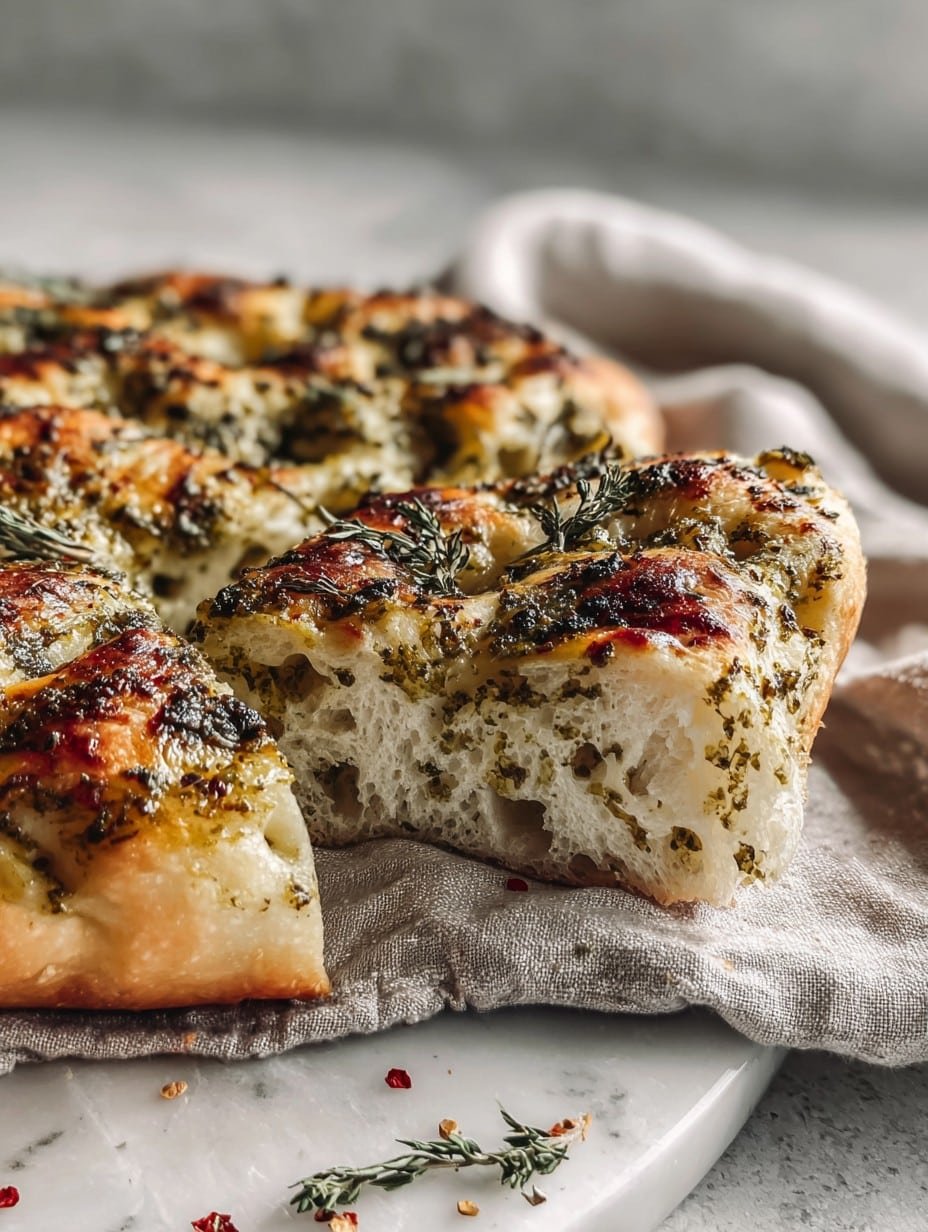
I pull out this recipe when I want the kitchen to smell bready and warm and herby (and also impress people at potlucks with suspiciously little work). My family basically cheers when I say it’s sourdough focaccia night. I love the way the pesto swirls into the dough, and, you know, it sort of covers up any weird lumps or uneven bits. Actually, once I totally forgot the olive oil on top and it was still gone in 30 minutes flat. Plus, it’s a sneaky way to use up that last wilting bunch of basil about to give up in the produce drawer.
Here’s What You’ll Need (With a Few Swaps and Stories)
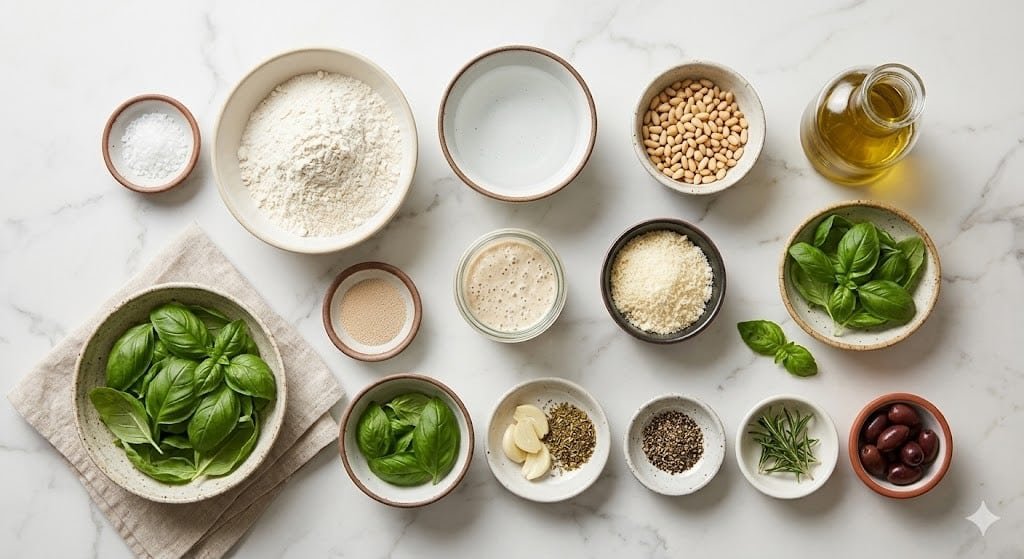
- 350g bread flour (I’ve used plain flour in a pinch; it rises a bit less but it’ll do)
- 250g active sourdough starter (honestly, I just take whatever’s bubbling—don’t stress if it’s a few grams off)
- 1 tsp sea salt (sometimes I use table salt, no disasters yet)
- 250ml lukewarm water (room temperature is fine if you forgot to warm it)
- 40ml olive oil, plus extra for pan and drizzling (my grandmother swore by Greek brands but, as I found out, store-brand is also fine—shh)
- 4 heaping tbsp pesto (store-bought or homemade, and if all you have is red pesto, use it—it’s honestly delicious)
- Flaky salt for topping (I skip it if I run out or add a little Parm instead, because why not?)
The Probably-Not-Textbook Directions
- In a big mixing bowl, dump in the bread flour, active sourdough starter, sea salt, and water. Stir it all together (with a sturdy wooden spoon or, who am I kidding, your hand if it comes to it) until a shaggy dough forms. It kind of looks odd—don’t worry, it’ll pull together later!
- Let the dough rest for 30 minutes. I usually use this time to start cleaning up the green splatters—that pesto gets everywhere. Or make tea.
- Stretch and fold the dough a few times; basically, grab an edge, pull it up, fold it over, spin the bowl, and repeat. Do this maybe 4 times. Then cover the bowl with a plate or clingwrap and let it rest at room temperature for 4 to 6 hours, until it’s puffed up noticeably (on warm days it’s more like 3 hours, in the winter I sometimes let it go overnight).
- Line a baking pan (about 9×13 inches or just use whatever you have) with baking paper and drizzle in some olive oil. Plop the dough into the pan and gently stretch it to the corners. If it snaps back, cover and let it rest 10 minutes, then try again.
- Once it’s mostly spread out, dimple the dough with your fingertips—this is the best part, honestly; it’s like edible bubble wrap. Drizzle the top with the rest of the olive oil and dollop the pesto all over. Swirl the pesto in with a spoon or your fingers. If it gets messy, all the better.
- Cover the pan and let it rise at room temp for another hour or so, until it looks puffy but not crazy enormous.
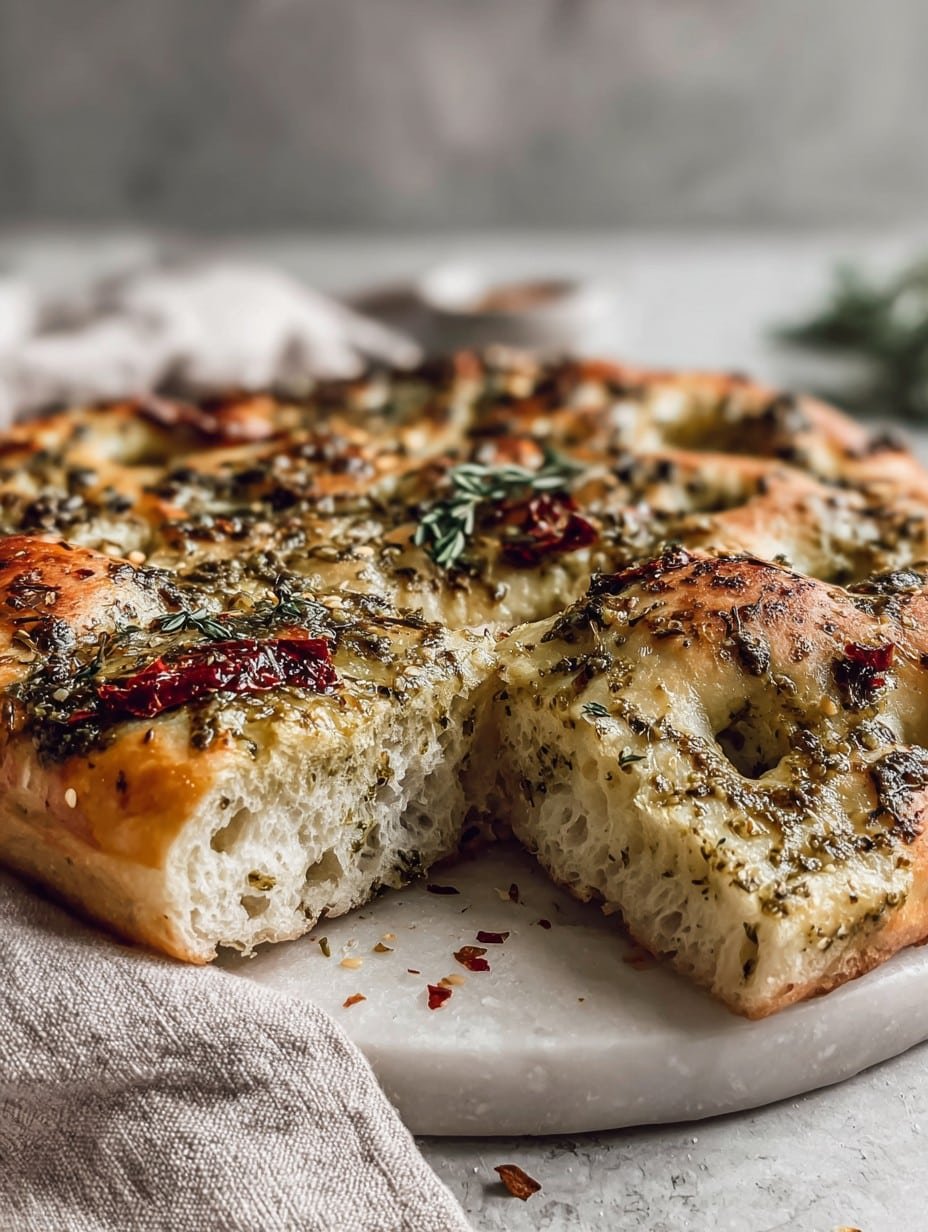
- Preheat your oven to 220°C (425°F). Sprinkle the focaccia all over with flaky salt or a little Parmesan if you’re me and out of salt. Bake for 20–25 minutes on the middle rack, or until it’s golden brown on top and the kitchen smells like a bakery and an Italian restaurant got together and threw a party.
- Let it cool in the pan for 10–15 minutes (I can never wait the full time) before slicing. Try not to burn your fingers; I fail at this regularly.
Near-Perfect Notes from Me to You
- If your dough is super sticky, add a sprinkle of flour, but don’t go nuts—sticky = airy later.
- Store-bought pesto’s fine, but I’ve learned to drain off extra oil, otherwise the top gets a bit greasy. Not a big drama though.
- I think this actually tastes better the next day when the flavours have time to settle, but in reality, mine’s often gone before it’s even cooled.
If You Feel Adventurous—Variations I’ve Tried
- Sun-dried tomato pesto instead of basil—gives it a lovely sunset colour.
- Chopped olives sprinkled before baking for a briny kick.
- Once tried caramelised onions but honestly, they slid right off. Maybe if you knead them in next time?
Equipment—And Cheeky Alternatives
- 9×13 inch baking pan (but Grandma used two smaller tins, so…honestly, whatever’s oven-proof)
- A strong mixing bowl—though I once used a soup pot. Worked fine.
- Baking paper. Or just oil the pan really, really well.
Storing It (Though Rarely Needed Around Here)
Once it’s cool, you can wrap focaccia in foil and keep at room temp a day or so. I’ve reheated slices in the toaster for breakfast; they crisp up nicely. Freezer works if you somehow hide a chunk—just wrap tight first. (Though honestly, in my house it never makes it past day one unless I flat-out hide it.)
Serving It Up—How We Do It at My Place
It’s tearing and sharing all the way—with soups, next to a salad, or (my favourite) dunked straight into more olive oil. Sometimes we make focaccia sandwiches with tomato and cheese. One cousin puts honey on it. Not sure how I feel about that, but there you go.
What I’ve Learned the Hard Way (aka Pro Tips)
- Don’t skip the stretch and fold—it really helps with the open crumb. I cut corners once and got flatbread… Nice, but not the vibe.
- Bake on the middle rack so the base doesn’t go too brown. On second thought: if your oven’s as temperamental as mine, keep an eye out at the end.
- Actually, letting it cool (at least a bit) does make it easier to slice, even if you’re tempted to dig in right away.
FAQ—As Asked by My Friends and Random Family Members
- Can I use commercial yeast instead of sourdough starter?
- Yep! Use about 7g (one packet) active dry yeast and let it prove until puffy, but you’ll miss a little of that tangy flavour (still good though).
- Do I have to use homemade pesto?
- Nope, store-bought’s totally fine. I can barely taste the difference most days—just maybe stir off that layer of oil at the top before dolloping.
- My dough’s super sticky—is that bad?
- No, sticky dough is usually a good sign for focaccia. But, if it’s completely unmanageable, dust in a handful more flour. Don’t overdo it, though, or it might come out tough.
- Can I make this without a stand mixer?
- Oh, absolutely. I never use one for focaccia, just a wooden spoon and sometimes my hands if it’s really being stubborn. Less stuff to wash, too.
- What if my focaccia edges look a bit ‘rustic’?
- Welcome to the club! Rustic edges = best bits in my opinion. Call it artisanal and watch the compliments roll in.
Now, if you’re still reading, hats off. Let me know if you have any glorious focaccia fails or wild pesto combos—I’m all ears (and, apparently, prone to bread-related disasters). Happy baking, mate!
Ingredients
- 350g bread flour (I’ve used plain flour in a pinch; it rises a bit less but it’ll do)
- 250g active sourdough starter (honestly, I just take whatever’s bubbling—don’t stress if it’s a few grams off)
- 1 tsp sea salt (sometimes I use table salt, no disasters yet)
- 250ml lukewarm water (room temperature is fine if you forgot to warm it)
- 40ml olive oil, plus extra for pan and drizzling (my grandmother swore by Greek brands but, as I found out, store-brand is also fine—shh)
- 4 heaping tbsp pesto (store-bought or homemade, and if all you have is red pesto, use it—it’s honestly delicious)
- Flaky salt for topping (I skip it if I run out or add a little Parm instead, because why not?)
Instructions
-
1In a big mixing bowl, dump in the bread flour, active sourdough starter, sea salt, and water. Stir it all together (with a sturdy wooden spoon or, who am I kidding, your hand if it comes to it) until a shaggy dough forms. It kind of looks odd—don’t worry, it’ll pull together later!
-
2Let the dough rest for 30 minutes. I usually use this time to start cleaning up the green splatters—that pesto gets everywhere. Or make tea.
-
3Stretch and fold the dough a few times; basically, grab an edge, pull it up, fold it over, spin the bowl, and repeat. Do this maybe 4 times. Then cover the bowl with a plate or clingwrap and let it rest at room temperature for 4 to 6 hours, until it’s puffed up noticeably (on warm days it’s more like 3 hours, in the winter I sometimes let it go overnight).
-
4Line a baking pan (about 9×13 inches or just use whatever you have) with baking paper and drizzle in some olive oil. Plop the dough into the pan and gently stretch it to the corners. If it snaps back, cover and let it rest 10 minutes, then try again.
-
5Once it’s mostly spread out, dimple the dough with your fingertips—this is the best part, honestly; it’s like edible bubble wrap. Drizzle the top with the rest of the olive oil and dollop the pesto all over. Swirl the pesto in with a spoon or your fingers. If it gets messy, all the better.
-
6Cover the pan and let it rise at room temp for another hour or so, until it looks puffy but not crazy enormous.
-
7Preheat your oven to 220°C (425°F). Sprinkle the focaccia all over with flaky salt or a little Parmesan if you’re me and out of salt. Bake for 20–25 minutes on the middle rack, or until it’s golden brown on top and the kitchen smells like a bakery and an Italian restaurant got together and threw a party.
-
8Let it cool in the pan for 10–15 minutes (I can never wait the full time) before slicing. Try not to burn your fingers; I fail at this regularly.
Approximate Information for One Serving
Nutrition Disclaimers
Number of total servings shown is approximate. Actual number of servings will depend on your preferred portion sizes.
Nutritional values shown are general guidelines and reflect information for 1 serving using the ingredients listed, not including any optional ingredients. Actual macros may vary slightly depending on specific brands and types of ingredients used.
To determine the weight of one serving, prepare the recipe as instructed. Weigh the finished recipe, then divide the weight of the finished recipe (not including the weight of the container the food is in) by the desired number of servings. Result will be the weight of one serving.
Did you make this recipe?
Please consider Pinning it!