Right, confession time: I used to think you had to be Martha Stewart—or like, part-time alchemist—to make legit homemade bagels. Something about boiling and baking bread just sounded a bit over the top! But then I stumbled onto this wild (okay, not that wild) shortcut using Greek yogurt. Next thing I know, I’m pulling hot, fluffy bagels out of the oven, and my kitchen smells like a proper bakery (if you ignore the stack of dirty dishes—details, details). If you’ve never made bread before, honestly, this is the one recipe that might just nudge you over to the doughy side of life.
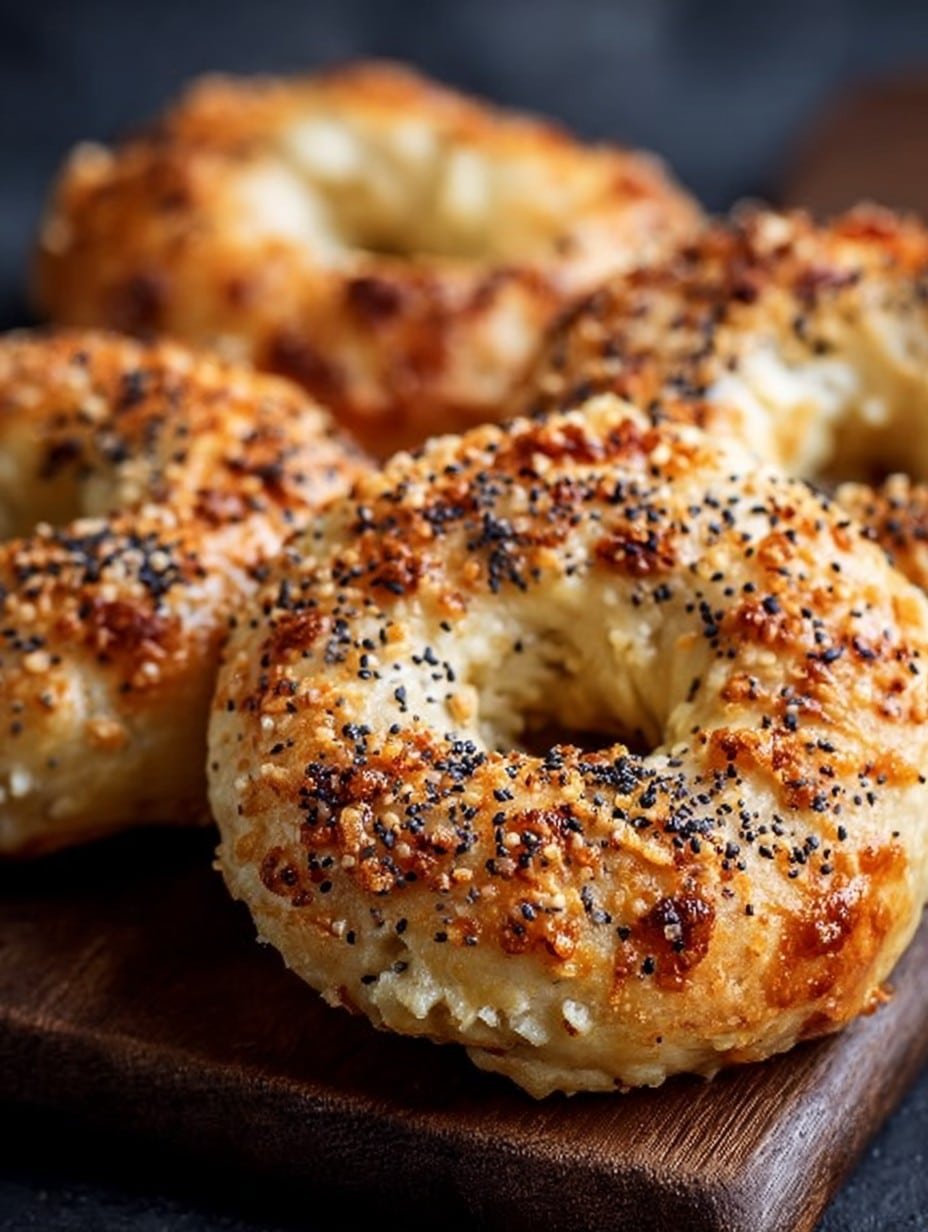
Why You’ll Love These Little Yogurt Bagels
I make these when my kid decides she wants a “bagel picnic” on the living room floor. They’re a hit for last-minute brunch plans (when I forgot to buy anything fancy) or, truthfully, when I desperately want to eat a bagel but can’t be bothered with a whole rising, proofing palaver. My family goes bananas for these mostly because they taste like bagels, but with a subtle twang—Greek yogurt does that thing where it feels creamy and tangy at the same time. Oh! Plus, there’s no yeast to mess about with, so you skip the waiting and leap straight into carb heaven. (If your dough seems a tad sticky, don’t worry. Last time I made these I got distracted and dumped in extra flour and honestly, they still came out edible.)
What You’ll Need (No Secret Code Required)
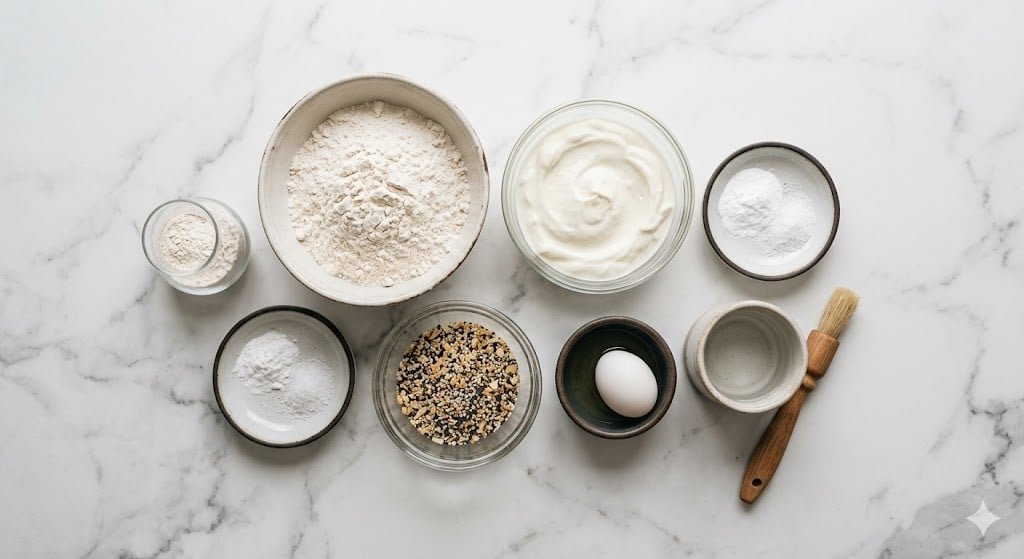
- 1 cup Greek yogurt (plain, the thicker the better—my grandmother swore by ‘FAGE’ but honestly any Greek yogurt works, sometimes I use the store brand and nobody’s the wiser)
- 1 cup self-raising flour (if you only have regular flour, just mix 1 cup flour plus 1 1/2 teaspoons baking powder and 1/4 teaspoon salt—seriously, that’s all self-raising flour is!)
- 1/2 teaspoon salt (sometimes I just eyeball this, it’s not rocket science)
- 1 large egg, beaten, for brushing (or skip it if you’re out—bagels will just look a bit paler)
- Toppings: sesame seeds, poppy seeds, flaky sea salt, or, I dunno, everything bagel seasoning (which I use even though it’s a bit basic but SO good)
Let’s Make Some Magic (a.k.a. Greek Yogurt Bagels)
- First things first: preheat your oven to 375°F (190°C). Grab a baking tray and either line it with parchment or give it a once-over with a bit of oil or nonstick spray. Trust me—less mess.
- In a medium bowl, stir together the self-raising flour and salt. Honestly, sometimes I skip sifting. Dump in the Greek yogurt; mix with a spoon or spatula until it sorta clumps. Don’t expect it to look like normal dough—it’s thick, sticky, shaggy. Embrace the chaos here.
- Flour your countertop (and probably your hands and shirt too). Scrape out the dough and gently knead it a few times until it’s less sticky and just coming together. If it’s still basically glue, dust in a bit more flour, but don’t overdo it or your bagels get tough.
- Divide the dough into 4 roughly equal chunks. Roll each into a snake (you know, like Play-Doh), about 6 inches. Join the ends to make a bagelish circle—if the seam’s being stubborn, just pinch it together. Perfection is overrated here.
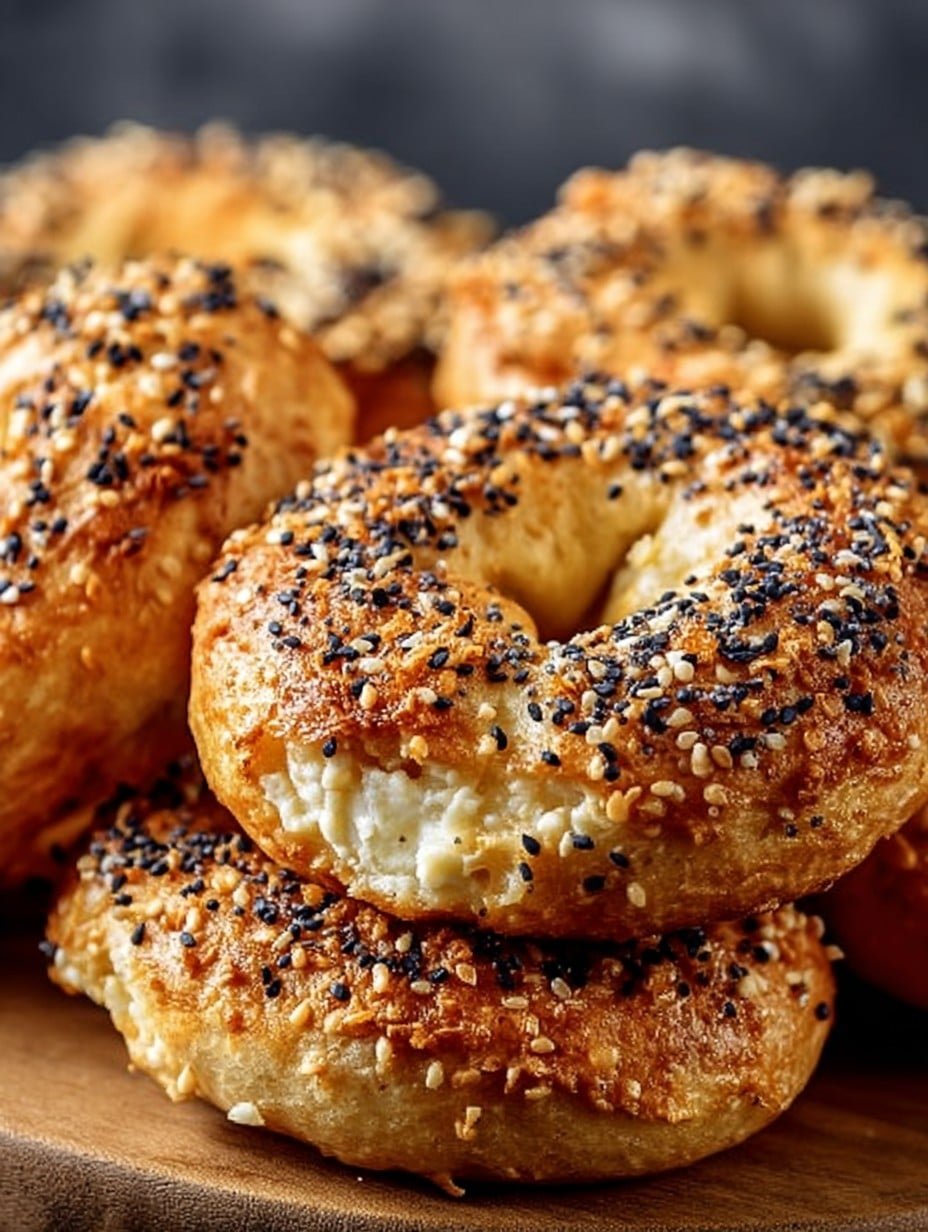
- Transfer your not-quite-round bagels to the tray. Brush the tops with beaten egg. This part is where the magic golden color happens. Sprinkle with toppings—I go overboard with sesame seeds because, why not?
- Bake for 22 to 25 minutes, or til the bagels are puffy, golden and smell ridiculously good. I usually rotate the pan halfway (or at least I mean to remember to!).
- Let them cool for a few minutes before slicing. Or, if you’re like me, take a bite and burn your tongue because patience is not my strong suit.
Handy Notes & Little Discoveries
- Don’t overwork the dough; it gets kind of rubbery. Trust me, I tried trying to get them Instagram-perfect and paid the price!
- If you hate egg wash you can use milk instead—but the color’s less epic.
- These bagels are best eaten fresh. But, actually, I think this tastes better the next day if you pop it in the toaster.
- You don’t need fancy Greek yogurt. Hang on, actually, I’ve tried it with thick plain yogurt and it’s still totally fine.
Things I’ve Tried That Are (Mostly) Delicious
- I once swapped half the flour for whole wheat—it made the bagels denser, but not in a bad way.
- Chucking in a handful of grated cheddar before kneading? Unreal, especially if you toast them the next day.
- I tried adding cinnamon and raisins once… it went a bit wonky. Love cinnamon, but these bagels didn’t!
What If I Don’t Have a…?
- No pastry brush? I’ve used a bit of kitchen paper rolled up, or just dabbed on the egg with a spoon (not elegant but, hey, it works)
- Don’t have a big oven tray? Use two smaller ones, or even shove the bagels close together—they just get a little side-hug overlapping bit. Tastes the same.
Bagel Storage
They keep in a zip bag on the counter for a day or two. Or in the fridge for three-ish days, but beware—they dry out a bit. You can freeze them (slice first for lazy toasting), but honestly, these never last that long in my house, unless I hide one in the veggie drawer. Which sometimes works.
Serving (Beyond Plain Old Cream Cheese)
I love these split, toasted, slathered in butter and sprinkled with a bit more salt (slippery slope, that). Sometimes I do a proper New York moment and pile on smoked salmon—if I want to feel fancy. My kid just dips chunks in hummus. Weirdo, but actually—pretty good.
Pro Tips I Learned the Hard Way
- I once tried rushing the kneading and ended up with a dough ball stuck to 90% of my hand. Be patient—use extra flour on your hands.
- Egg wash is optional, but skipping it makes bagels look kinda… anemic. Nothing tragic, just less of that bagel-y vibe.
- Don’t make them too big or too thick, otherwise they’re doughy in the middle. I found this out after my brother called it “raw bread circle.”
Real Questions I’ve Actually Been Asked
- Can I use non-Greek yogurt?
- Yep, but the dough might feel a bit stickier and the flavor is a tad less tangy. Still delish, just a little different.
- Do I have to use self-raising flour?
- Nope—just add baking powder and a pinch of salt to plain flour. Actually, I do this most of the time ’cause I forget to buy the fancy stuff.
- Egg wash—do I need it?
- Honestly, nah. It’s for color. Skip if you’re in a rush or vegan. Milk works, too, though slightly different look.
- Can I double (or triple) this recipe?
- Absolutely, but work in batches. If you try to knead a dough mountain, things get sticky fast—literally.
- Why does my dough look weird?
- It always looks weird! If it’s too sticky, sprinkle more flour. If it’s dry, a spoon of yogurt usually helps. Don’t overthink it.
Oh—and if you wind up with flour handprints all over your fridge, you’re in good company. That’s just bagel energy in action.
Ingredients
- 1 cup Greek yogurt (plain, the thicker the better—my grandmother swore by ‘FAGE’ but honestly any Greek yogurt works, sometimes I use the store brand and nobody’s the wiser)
- 1 cup self-raising flour (if you only have regular flour, just mix 1 cup flour plus 1 1/2 teaspoons baking powder and 1/4 teaspoon salt—seriously, that’s all self-raising flour is!)
- 1/2 teaspoon salt (sometimes I just eyeball this, it’s not rocket science)
- 1 large egg, beaten, for brushing (or skip it if you’re out—bagels will just look a bit paler)
- Toppings: sesame seeds, poppy seeds, flaky sea salt, or, I dunno, everything bagel seasoning (which I use even though it’s a bit basic but SO good)
Instructions
-
1First things first: preheat your oven to 375°F (190°C). Grab a baking tray and either line it with parchment or give it a once-over with a bit of oil or nonstick spray. Trust me—less mess.
-
2In a medium bowl, stir together the self-raising flour and salt. Honestly, sometimes I skip sifting. Dump in the Greek yogurt; mix with a spoon or spatula until it sorta clumps. Don’t expect it to look like normal dough—it’s thick, sticky, shaggy. Embrace the chaos here.
-
3Flour your countertop (and probably your hands and shirt too). Scrape out the dough and gently knead it a few times until it’s less sticky and just coming together. If it’s still basically glue, dust in a bit more flour, but don’t overdo it or your bagels get tough.
-
4Divide the dough into 4 roughly equal chunks. Roll each into a snake (you know, like Play-Doh), about 6 inches. Join the ends to make a bagelish circle—if the seam’s being stubborn, just pinch it together. Perfection is overrated here.
-
5Transfer your not-quite-round bagels to the tray. Brush the tops with beaten egg. This part is where the magic golden color happens. Sprinkle with toppings—I go overboard with sesame seeds because, why not?
-
6Bake for 22 to 25 minutes, or til the bagels are puffy, golden and smell ridiculously good. I usually rotate the pan halfway (or at least I mean to remember to!).
-
7Let them cool for a few minutes before slicing. Or, if you’re like me, take a bite and burn your tongue because patience is not my strong suit.
Approximate Information for One Serving
Nutrition Disclaimers
Number of total servings shown is approximate. Actual number of servings will depend on your preferred portion sizes.
Nutritional values shown are general guidelines and reflect information for 1 serving using the ingredients listed, not including any optional ingredients. Actual macros may vary slightly depending on specific brands and types of ingredients used.
To determine the weight of one serving, prepare the recipe as instructed. Weigh the finished recipe, then divide the weight of the finished recipe (not including the weight of the container the food is in) by the desired number of servings. Result will be the weight of one serving.
Did you make this recipe?
Please consider Pinning it!