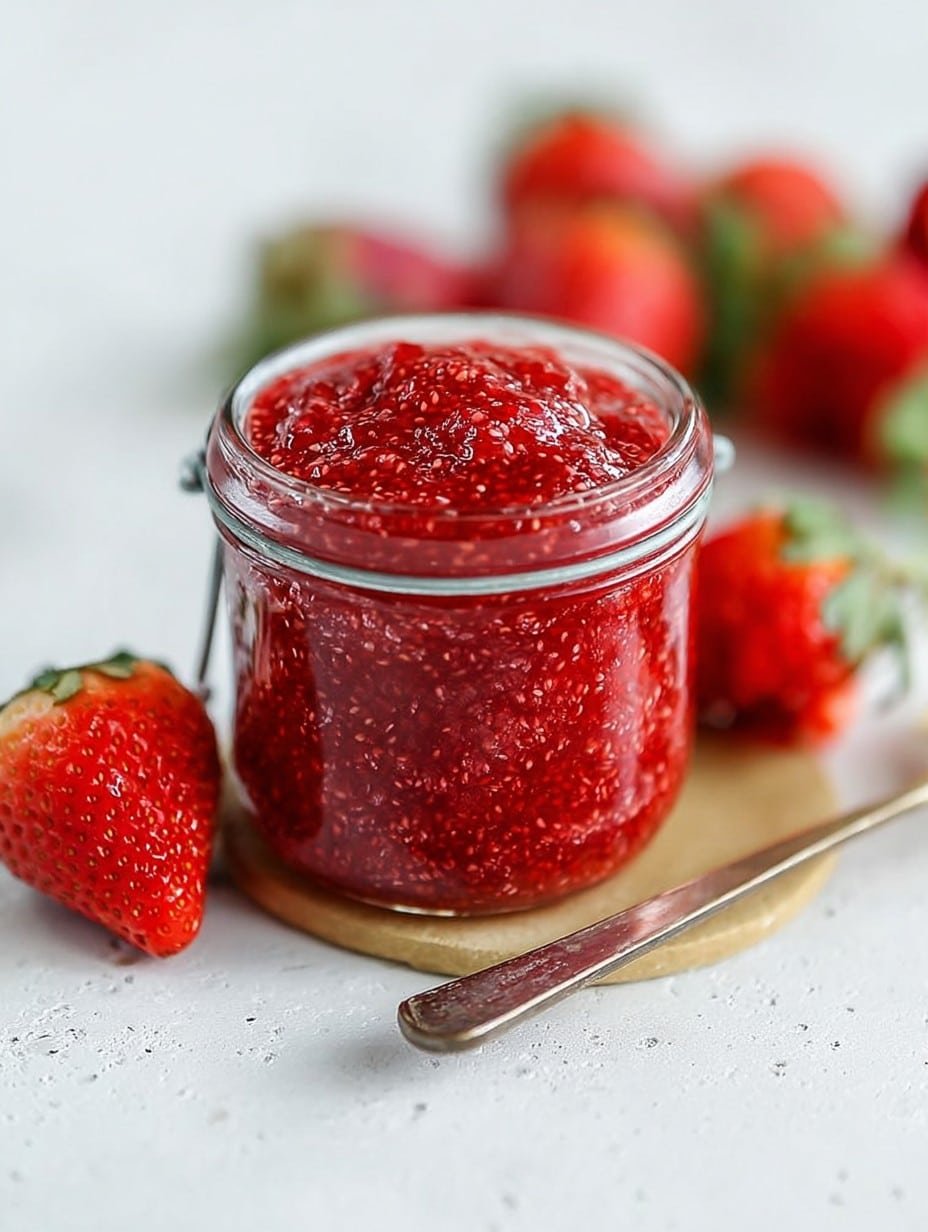
Let me tell you about this strawberry chia jam…
You ever have one of those days when you realise the jam shelf is suspiciously empty, but you promised toast with something special on top? That’s basically how this recipe was born at my house—well, the first time, at least. The store-bought stuff was running low (if not a little suspiciously crusty), and the strawberries in the fridge were starting to look a bit sad. Now, every time I whip up a batch, it brings me back to that first slightly frantic afternoon—plus, my youngest says it just tastes more “real.” And in all honesty, making jam just feels kind of magical—like turning pocket change into a holiday!
Funny little aside: the first time I tried to make chia jam, I got distracted folding laundry and forgot to stir. It was, as you’d expect, fairly dubious, and I now set a timer as insurance. Lesson learned (sometimes the hard way, but at least it’s tasty research).
Why you’ll probably love this (like I do)
I make this when I can’t bear the thought of a sugar overload, or when I want something honest for toast. My family goes a bit mad for it—especially on pancakes (seriously, it disappears before it even cools). And okay, occasionally the strawberries aren’t at their best, but you know what? The chia seeds sort of save the day every time. There were weeks I tried nearly every store jam but making this myself is just less hassle than a trip to the shop—and a lot less plastic, too.
If you’re thinking “But isn’t jam fiddly?”, trust me—I used to think so too. Then I tried this. Even my husband, who’s suspicious of anything with seeds, goes back for seconds (and mutters about “texture” but eats it anyway). Oh, and it’s actually good for you. Not enough things are, if you ask me.
This is what you’ll need (but feel free to swap!)
- 2 heaping cups of fresh strawberries (about 300g, though I’ve been lazy and used frozen—still works, promise)
- 2 to 3 tablespoons chia seeds (& not the fancy kind—whatever you get at the supermarket works)
- 2 to 3 tablespoons honey or maple syrup (sometimes I skip altogether if berries are sweet; my friend adds agave, which is grand)
- 1/2 teaspoon vanilla extract (or, when I’m out, a pinch of ground cinnamon does the trick)
- A squeeze of lemon juice (optional, but brightens if your berries are a bit flat)
On hectic mornings, I’ll swap in mixed berries or even a handful of chopped peaches. My gran used to insist on a particular brand of honey, but to be honest, the stuff from the Irish market down the road is my favorite.
So how do you actually throw this together?
- Pop your strawberries into a saucepan, hulls off. (If you’re using frozen, no worries—throw them in frozen, just crank the heat a bit at first.)
- Set over medium heat and start mashing them up as they soften—sometimes I use a potato masher; other times, a fork. No need to be fancy. (This is when I sneak my first taste. Perks of the job.)
- Stir and let them bubble, stirring every so often for about 5-8 minutes, until it’s all juicy and fruit has released all its drama.
- Take the pot off the heat, then add the chia seeds right away—give it a good stir so it doesn’t clump up like porridge gone rogue.
- Mix in your honey, vanilla, and a squirt of lemon (if you’re using any).
- Let it sit for 10-15 minutes to thicken. It’ll look a bit funny and lumpy at first—don’t panic; that’s just science.
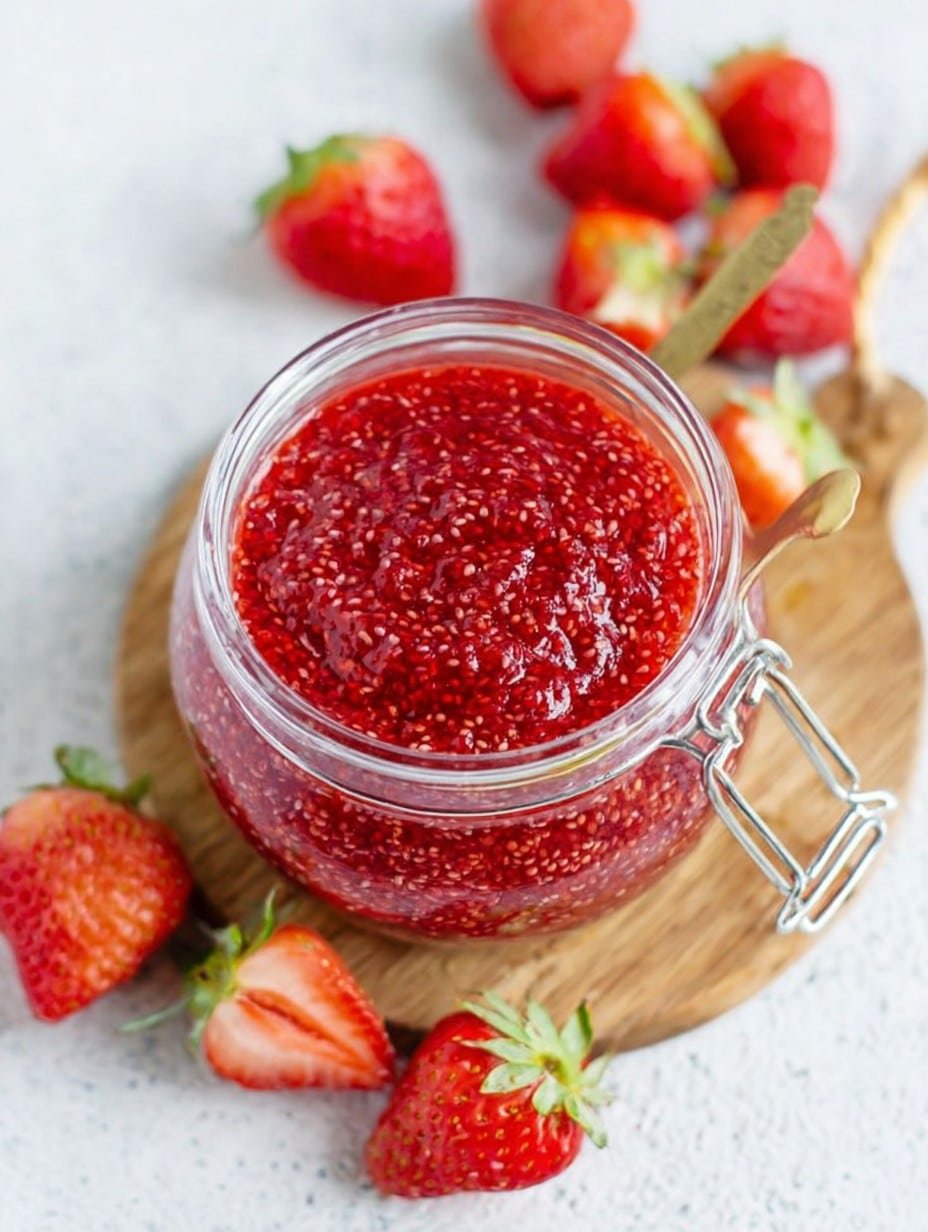
- Once it’s cooled to your liking, spoon into a jar or whatever you’ve got handy. I use an old chutney jar, but ramekins have stood in more than once.
Eat some right off the spoon because, well, obviously. You made jam. Of course you should.
Some notes—aka things I’ve learned the sticky way
- If you want it smoother, blitz it a bit with a stick blender. But I usually can’t be bothered unless I’m feeling overachievey.
- Sometimes it sets firmer after a few hours in the fridge; sometimes it stays more like a thick sauce. Either works—jam law is flexible here.
- I once forgot the honey entirely; still tasty, but a bit tart for the younger crowd.
Here’s some ways I’ve messed with it (mostly on purpose)
- Mixed berries: Good, easy. Blueberries get a bit runnier, so add extra chia if you try this.
- Peach or mango: Surprisingly lush. Weirdly, banana did NOT work, don’t ask me why. That’s best left for smoothies.
- Spices: Pinch of cardamom = sophisticated breakfast. At least in my head.
What you’ll need—plus how to sub if you’re missing tools
- Saucepan (I’ve used a frying pan in a pinch. Got some odd looks, but hey, it’s all heat.)
- Potato masher or fork (or even the bottom of a mug if you’re a kitchen rebel)
- Jar or bowl for storing (Matching lids are a luxury, not an essential)
How to not let it go to waste (which, honestly, never happens here)
Keep your jam in the fridge. It’ll last about a week, technically. Though to be honest, it rarely makes it past 24 hours in my house. I like to give it a nudge with a spoon every now and then just to see how it’s doing (and grab a taste. Quality control, right?). Doesn’t freeze as perfectly as store-bought, but maybe that’s part of its charm.
How we actually eat this jam (and a family tradition)
It’s brilliant on toast, of course, but I’m partial to a big blob on plain yogurt (with a splash of cream if I’m feeling posh). My lot likes it swirled into porridge. My sister puts it between layers of Victoria sponge—bit extravagant, but respect. On scones, straight up, is my late-night treat—bonus points for catching the last bit with your finger.
What I wish I’d known sooner (a couple of pro-ish tips)
- I once tried to skip the letting-it-thicken-on-the-counter stage—ended up scraping runny jam off the toast. Don’t be me; give it time.
- Actually, I find it works better if you taste the strawberries first. Some batches are crammed with flavor; others need a little extra sweet talking (literally—add more honey or lemon as needed).
Some questions I get all the time (no, really!)
- “Can I use other fruits?” Absolutely! Just keep an eye on how juicy they get. Stone fruits can be trickier, though—so maybe skip plums unless you’re into weird soup.
- “Can I make it sweeter?” You bet—just add more honey or whatever sweetener you fancy. Once I tried adding too much maple and, well, it tasted more like pancake syrup. Live and learn.
- “What if I don’t have chia seeds?” Honestly, the texture’s hard to match, but you could try ground flaxseed. It’s not quite the same, but it’ll thicken eventually. Might look a bit odd to picky eaters, though.
- “Is this proper jam?” Technically, it’s more of a ‘spread.’ But in my book, if it goes on toast, it’s jam. The jam police have yet to show up, so…
- “Can I double the recipe?” Yep, but it does take longer to set up—so be patient. Or make two small batches; I’ve done both when distracted and honestly didn’t notice much difference in the end.
So there you have it! Easy strawberry chia jam—even when you’re a bit distracted or slapdash. If all else fails: just eat the berries and call it rustic breakfast. Works for me.
Ingredients
- 2 cups fresh strawberries, hulled and chopped
- 2 tablespoons chia seeds
- 2-3 tablespoons maple syrup (or honey)
- 1 teaspoon lemon juice
- 1/2 teaspoon vanilla extract
- Pinch of salt
- 1 tablespoon water (optional, as needed)
Instructions
-
1Add the chopped strawberries to a small saucepan and cook over medium heat, stirring occasionally, for about 5 minutes until the strawberries start to break down.
-
2Mash the strawberries with a fork or potato masher to your desired consistency.
-
3Stir in the chia seeds, maple syrup, lemon juice, vanilla extract, and a pinch of salt. Reduce the heat to low and simmer for 5 minutes, stirring frequently.
-
4If the jam is too thick, add 1 tablespoon of water to loosen it. Remove from heat and let cool—mixture will thicken further as it cools.
-
5Transfer the jam to a clean jar or container. Store in the refrigerator for up to 1 week. Enjoy on toast, yogurt, or oatmeal.
Approximate Information for One Serving
Nutrition Disclaimers
Number of total servings shown is approximate. Actual number of servings will depend on your preferred portion sizes.
Nutritional values shown are general guidelines and reflect information for 1 serving using the ingredients listed, not including any optional ingredients. Actual macros may vary slightly depending on specific brands and types of ingredients used.
To determine the weight of one serving, prepare the recipe as instructed. Weigh the finished recipe, then divide the weight of the finished recipe (not including the weight of the container the food is in) by the desired number of servings. Result will be the weight of one serving.
Did you make this recipe?
Please consider Pinning it!!