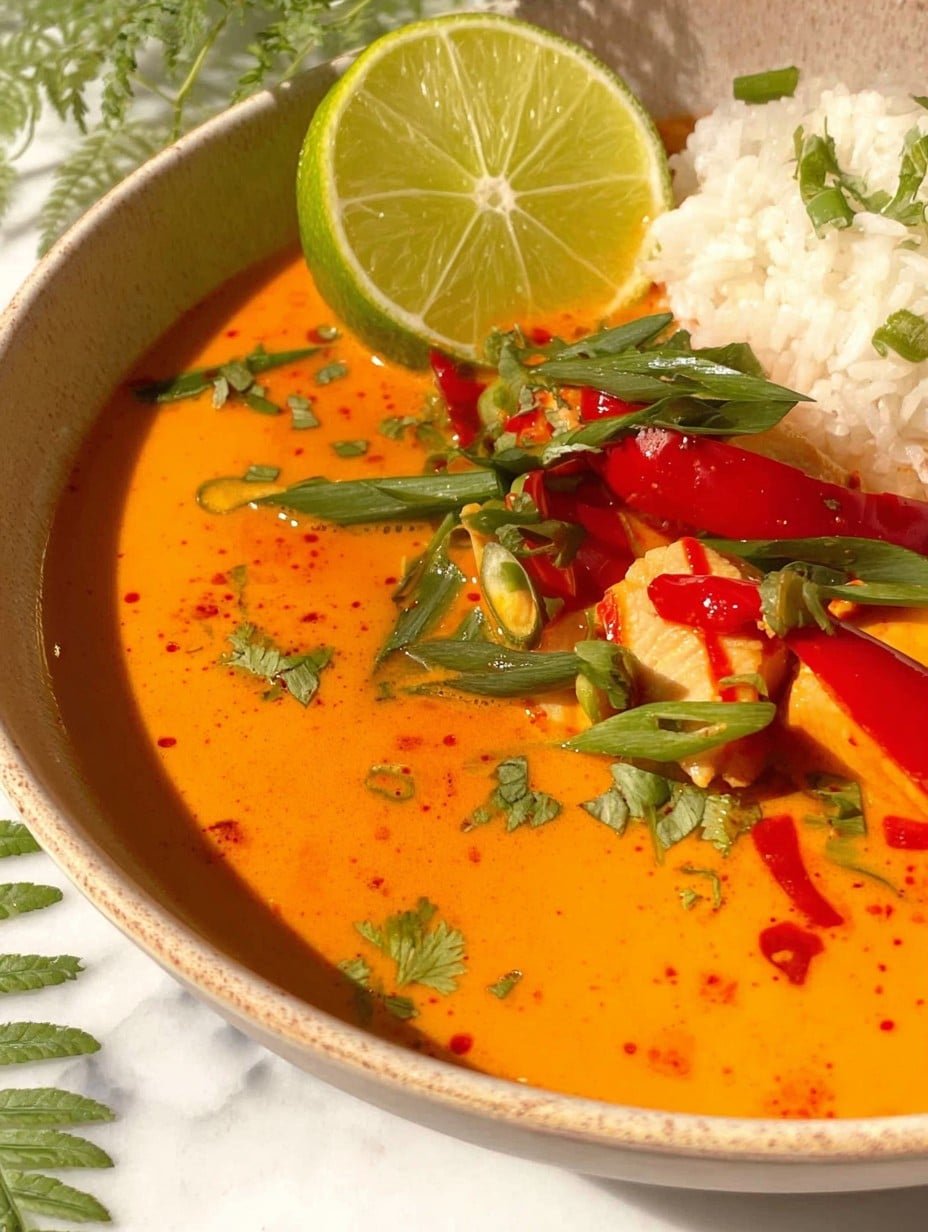
Okay, so let me set the scene: it’s a Tuesday. Absolutely nothing fun about it—my fridge was looking emptier than my motivation, and all I wanted was something cozy and comforting that didn’t require a degree in molecular gastronomy or, honestly, more than one pot. Enter: Easy Thai Red Curry. I first cobbled together my own version in university, after entirely too many late-night takeout sessions ate up my rent money. I still remember being so surprised by how forgiving—dare I say, unfussy—this curry is. (I mean, unless you try adding pineapple. Don’t do it—it was a weird phase.) You’ll get heaps of flavor for honestly not much more effort than scrambling some eggs.
Why I Keep Coming Back To This Curry
You know those dinners folks ask for on repeat? This is mine. I make this Thai red curry whenever it’s rainy out, when someone’s sick, or when I’m just craving those restaurant-ish flavors but want to eat in my pajamas. My family practically lines up at the stove (my partner always sneaks a taste ‘just to check the spice’). Sometimes, my only mild complaint is how quickly it disappears; I honestly wish leftovers would last longer! And if I’m feeling like I’ve wrecked dinner beyond repair, this is my redemption dish—it rarely lets me down (unless I overdo it with the fish sauce; rookie mistake!).
The Ingredients List (With Real Life Substitutions)
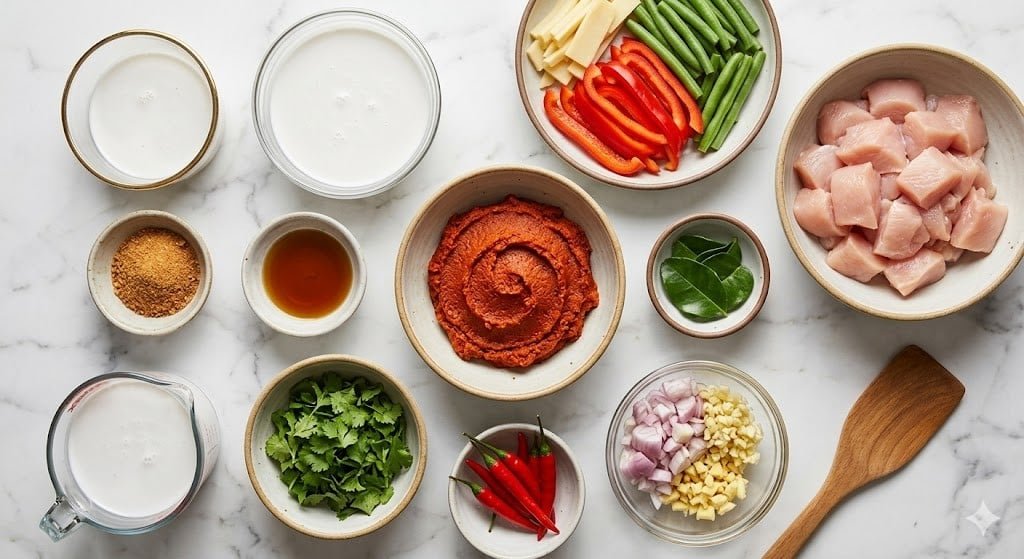
- 2 tablespoons Thai red curry paste (Mae Ploy is my standby, but honestly, whatever’s in a little jar at the store works. If you’re sensitive to spice, maybe go easy and use 1 tablespoon. Sometimes I sneak in yellow curry paste if red’s not around; not authentic, but good enough!)
- 1 can (400ml) coconut milk (full-fat for max creaminess, though I’ve used the light kind. It was, eh, okay.)
- 2 chicken breasts, thinly sliced (You can swap with tofu, shrimp, or honestly just load up on extra veggies—broccoli, peppers, even zucchini. Once I accidentally used leftover roast chicken, and it was still delicious!)
- 1 medium onion, sliced (Or shallots. Or skip entirely if you’re feeling lazy. No biggie.)
- 2 cloves garlic, minced (Garlic paste works in a pinch)
- 1 red bell pepper, sliced (Yellow or green will do. I once chucked in asparagus—yep, still tasty.)
- 2 carrots, sliced into coins (Sometimes I skip if I’m out—nobody misses them much)
- 1 tablespoon fish sauce (Soy sauce if you want it vegetarian. My grandma insisted it’s not curry without fish sauce, but I say don’t stress about it.)
- 1 teaspoon brown sugar (Or a squeeze of honey. White sugar isn’t my fave here, but it’ll do if it’s all you’ve got.)
- 1 tablespoon vegetable oil (Or honestly, whatever oil you grab first. Even a little butter works.)
- Fresh basil or cilantro, for sprinkling (Totally optional. My kids think it looks like broccoli and pick it off.)
- Jasmine rice, for serving (Basmati or even regular white rice works. Or skip rice entirely and eat it like a stew—I have, no judgment.)
Let’s Get Cooking! (Don’t Panic)
- Heat the oil in a big skillet or pot over medium heat. Once it’s shimmery, toss in the onions and cook for about 2 minutes until they’re a bit softened—don’t brown them, unless, oops, you get distracted (I’ve done this and it survived).
- Add the garlic—just for 30 seconds or so, until it smells amazing. If you forget and leave it longer, don’t worry, add a splash of water.
- Now spoon in your curry paste. Fry it for a couple of minutes; this is actually where the magic happens. You’ll see it darken and smell amazing. I usually use 2 tablespoons, but if you’re a spice wimp, dial it down a bit.
- Time for the chicken (or tofu, or veg!). Tumble in your pieces, and stir ’em around so they’re coated in that curry paste. You want them just losing their pink color—don’t fuss if they aren’t all the way cooked through. That’ll happen soon.
- Pour in the coconut milk. Stir it all together—you’ll notice it turns a lovely shade of orange-red. Sometimes it looks a bit split at this point; don’t panic, it’ll come together!
- Add the sliced bell pepper and carrots. Feel free to improvise here. Let it simmer for about 6–8 minutes, just till the veggies are tender but not limp. This is where I usually sneak a taste. If you want a thinner curry, splash in a little water.
- Stir in the fish sauce and brown sugar. Give it a minute, then taste again. Add a few more shakes of fish sauce if you want it saltier (I’ve made it too salty before; tiny additions, promise).
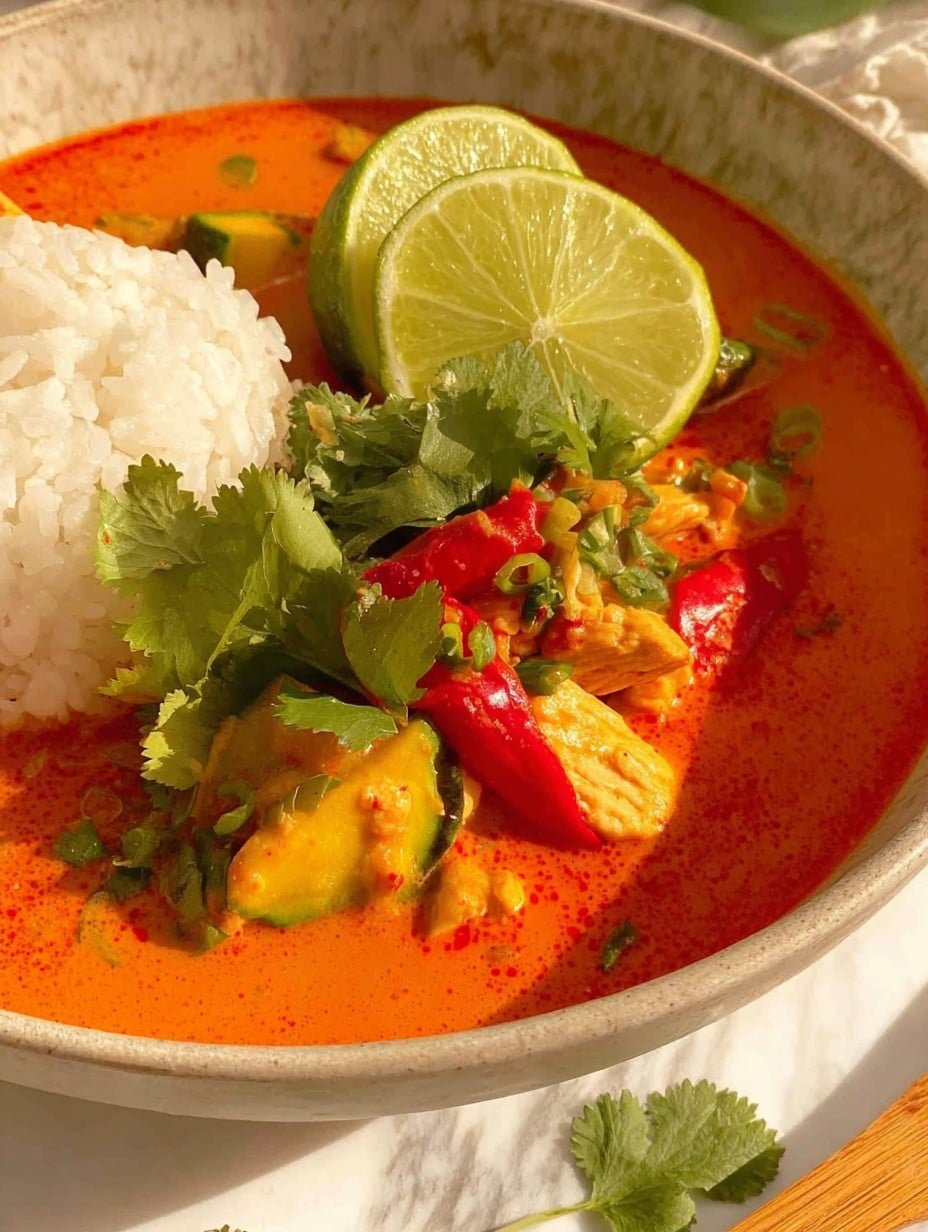
- Ladle your curry over rice, then shower with basil or cilantro if you like ‘em. Or skip the green stuff, I get it!
Things I’ve Learned by Making This (Sometimes the Hard Way)
- If you dump cold coconut milk straight form the fridge, it’ll split weirdly. Let it come up to room temp if you remember, but I usually don’t.
- Fish sauce is strong stuff. Add less than you think—then taste and go up (ask me about the one time my kitchen stank of fish for two days…)
- If your curry is too thick, add water; if too soupy, just simmer it longer—no recipe police here.
- Leftover curry (if you ever have any) tastes even better the next day, but don’t judge me if I eat cold curry right from the container.
Variations: Sometimes Weird, Sometimes Wonderful
- Swap out that chicken for shrimp (add them at the very end so they don’t get rubbery).
- Tofu, cubed and pan-fried gives it a nice chew. Frankly, sometimes I use frozen tofu that’s been hanging out in my freezer for months; it’s totally fine.
- Pineapple? Okay, full disclosure, I tried it, and while the sweet-hot combo is interesting, I don’t think I’d go for it again.
- Sometimes when I’m feeling wild (or just desperate), I add green beans or whatever half-forgotten veg is lurking in the fridge.
What If I Don’t Have All These Tools?
Honestly, you just need a big pan or pot. But if you don’t have a proper wok, a large frying pan is grand. Once, in a pinch on holiday, I cooked this in a random soup pot—worked a treat. No fuss about fancy utensils.
How To Store, If There’s Anything Left
This curry happily sits in the fridge for up to 3 days in a lidded container—though honestly, in my house it never lasts more than a day! (And it’ll thicken a bit overnight, but that’s not a bad thing.) I haven’t had great luck freezing it; the coconut milk sometimes separates on reheating, but maybe yours will behave better?
Serving It Up: What’s Trad and What’s Not
I love it over soft, fragrant jasmine rice—sometimes I get fancy, and add chopped peanuts on top, but that’s rare. My kids like to scoop it up with naan—not very Thai, but hey, I pick my battles. If I’m having friends over, I’ll put out lime wedges (that’s me pretending to be posh).
“Pro” Tips I Learned the Hard Way…
- Don’t try to rush frying the curry paste or you’ll miss out on all that depth of flavor. I once dumped everything in at once—tasted flat. Resist the urge!
- Start with less curry paste if you’re not sure about the spice. You can always add more, but pulling it out, well… good luck.
- Tasting as you go will save you every single time. My first curries were bland until I stopped following recipes to the letter (I mean, why be bossed around by a piece of paper?)
FAQ (Because You Asked!)
- Can I use green curry paste?
Sure! It’ll taste a bit different, more herby, but honestly pretty tasty. I’ve done it and nobody at my table minded. - Does this work in a slow cooker?
Actually, I find it works better if you do the curry paste step on the stove first—then sure, move it to your slow cooker! I once dumped it all in raw, and it was missing something (probably that magic curry paste sizzle step). - How spicy is this really?
Depends—some pastes are fire; others are pretty mild. Taste as you go, and remember, you can always toss in more chili or a splash of sriracha if you need heat. - Can I skip the fish sauce?
Yep—use soy sauce or even tamari for a veggie version. It’s different, but not less delicious. - My curry’s too thin! What now?
Just simmer it longer and let it thicken. Or, add some extra veggies to soak it up. Works every time in my books.
Side note: I once made this with nothing but carrots, onions, and a can of chickpeas when the grocery shop felt like climbing Everest. Was it the traditional Thai experience? Maybe not—I mean, it probably wouldn’t win a contest—but did we all eat well? You bet.
Ingredients
- 2 tablespoons Thai red curry paste (Mae Ploy is my standby, but honestly, whatever’s in a little jar at the store works. If you’re sensitive to spice, maybe go easy and use 1 tablespoon. Sometimes I sneak in yellow curry paste if red’s not around; not authentic, but good enough!)
- 1 can (400ml) coconut milk (full-fat for max creaminess, though I’ve used the light kind. It was, eh, okay.)
- 2 chicken breasts, thinly sliced (You can swap with tofu, shrimp, or honestly just load up on extra veggies—broccoli, peppers, even zucchini. Once I accidentally used leftover roast chicken, and it was still delicious!)
- 1 medium onion, sliced (Or shallots. Or skip entirely if you’re feeling lazy. No biggie.)
- 2 cloves garlic, minced (Garlic paste works in a pinch)
- 1 red bell pepper, sliced (Yellow or green will do. I once chucked in asparagus—yep, still tasty.)
- 2 carrots, sliced into coins (Sometimes I skip if I’m out—nobody misses them much)
- 1 tablespoon fish sauce (Soy sauce if you want it vegetarian. My grandma insisted it’s not curry without fish sauce, but I say don’t stress about it.)
- 1 teaspoon brown sugar (Or a squeeze of honey. White sugar isn’t my fave here, but it’ll do if it’s all you’ve got.)
- 1 tablespoon vegetable oil (Or honestly, whatever oil you grab first. Even a little butter works.)
- Fresh basil or cilantro, for sprinkling (Totally optional. My kids think it looks like broccoli and pick it off.)
- Jasmine rice, for serving (Basmati or even regular white rice works. Or skip rice entirely and eat it like a stew—I have, no judgment.)
Instructions
-
1Heat the oil in a big skillet or pot over medium heat. Once it’s shimmery, toss in the onions and cook for about 2 minutes until they’re a bit softened—don’t brown them, unless, oops, you get distracted (I’ve done this and it survived).
-
2Add the garlic—just for 30 seconds or so, until it smells amazing. If you forget and leave it longer, don’t worry, add a splash of water.
-
3Now spoon in your curry paste. Fry it for a couple of minutes; this is actually where the magic happens. You’ll see it darken and smell amazing. I usually use 2 tablespoons, but if you’re a spice wimp, dial it down a bit.
-
4Time for the chicken (or tofu, or veg!). Tumble in your pieces, and stir ’em around so they’re coated in that curry paste. You want them just losing their pink color—don’t fuss if they aren’t all the way cooked through. That’ll happen soon.
-
5Pour in the coconut milk. Stir it all together—you’ll notice it turns a lovely shade of orange-red. Sometimes it looks a bit split at this point; don’t panic, it’ll come together!
-
6Add the sliced bell pepper and carrots. Feel free to improvise here. Let it simmer for about 6–8 minutes, just till the veggies are tender but not limp. This is where I usually sneak a taste. If you want a thinner curry, splash in a little water.
-
7Stir in the fish sauce and brown sugar. Give it a minute, then taste again. Add a few more shakes of fish sauce if you want it saltier (I’ve made it too salty before; tiny additions, promise).
-
8Ladle your curry over rice, then shower with basil or cilantro if you like ‘em. Or skip the green stuff, I get it!
Approximate Information for One Serving
Nutrition Disclaimers
Number of total servings shown is approximate. Actual number of servings will depend on your preferred portion sizes.
Nutritional values shown are general guidelines and reflect information for 1 serving using the ingredients listed, not including any optional ingredients. Actual macros may vary slightly depending on specific brands and types of ingredients used.
To determine the weight of one serving, prepare the recipe as instructed. Weigh the finished recipe, then divide the weight of the finished recipe (not including the weight of the container the food is in) by the desired number of servings. Result will be the weight of one serving.
Did you make this recipe?
Please consider Pinning it!