This Strawberry Mochi Makes Me Feel Like a Kid Every Time
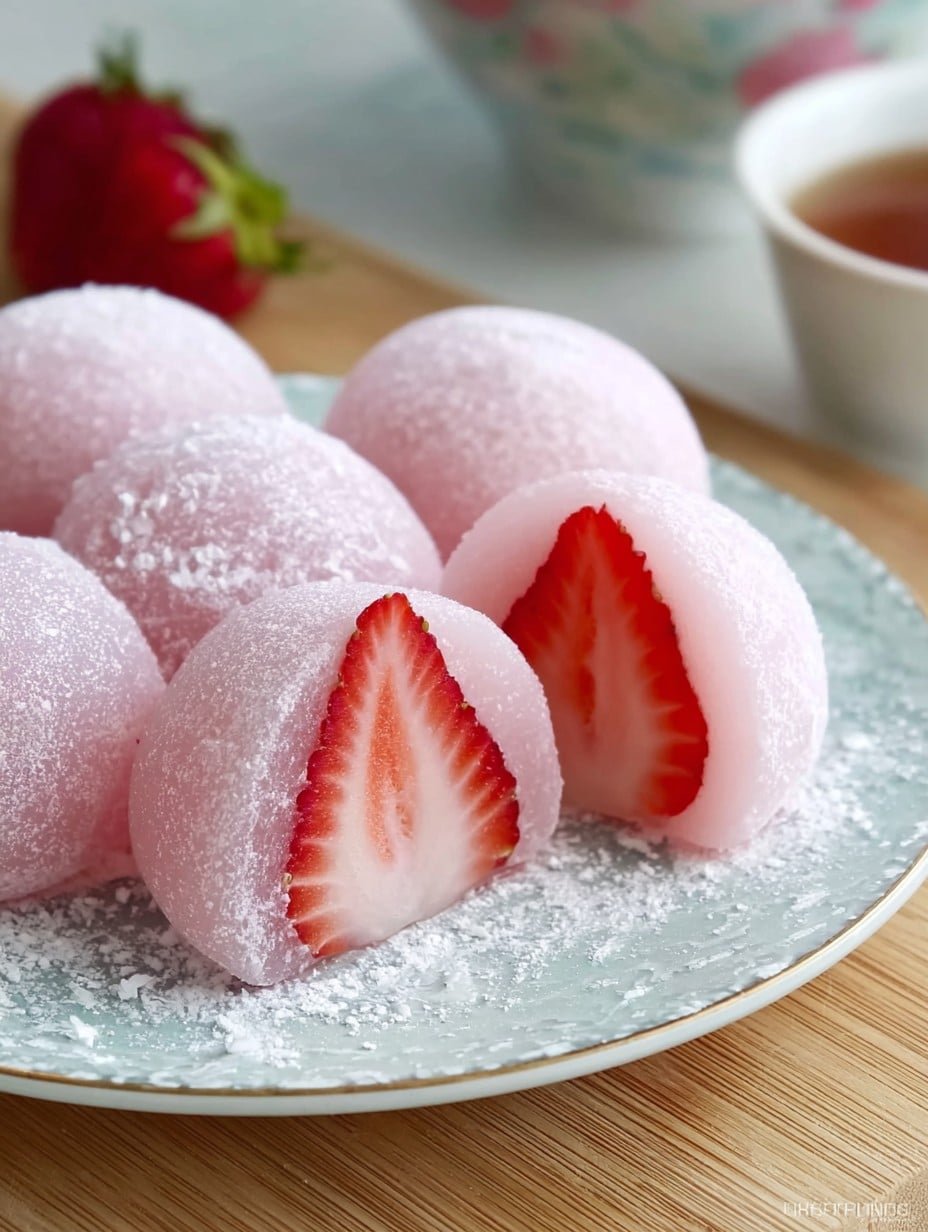
Okay, confession—when I first tried making mochi at home, I ended up with sticky rice goo on literally everything, including the dog (I don’t recommend this; he was thrilled though). But there’s just something about sinking your teeth into pillowy, sweet strawberry mochi that transports you, ya know? It’s the sort of snack that makes even a mundane Tuesday feel a little special. I started making this one summer after binging those food vlogs where everyone seemed to have nailed that stretchy, perfect mochi wrap. And honestly? After a couple of messes, I kinda did too! It’s now a thing at family get-togethers, sometimes disappearing before I can steal a second piece. Also, if you need an excuse to get pink powder on your jeans, this is it.
Why You’ll Love This Strawberry Mochi (Or At Least, Not Hate Making It)
I make this when strawberries look extra plump (or when they’re just about to go off, honestly)—kids go bonkers for anything pink, and even grumpy adults seem to cheer up a bit. My family raves about this because it’s soft, lightly sweet, barely takes any time (unless you count clean-up), and you can totally make a mess and call it art. Once I tried to shortcut the filling with jam rather than fresh berries—let’s just say, don’t. That got weird.
The Stuff You Need (And a Few Non-Essentials)
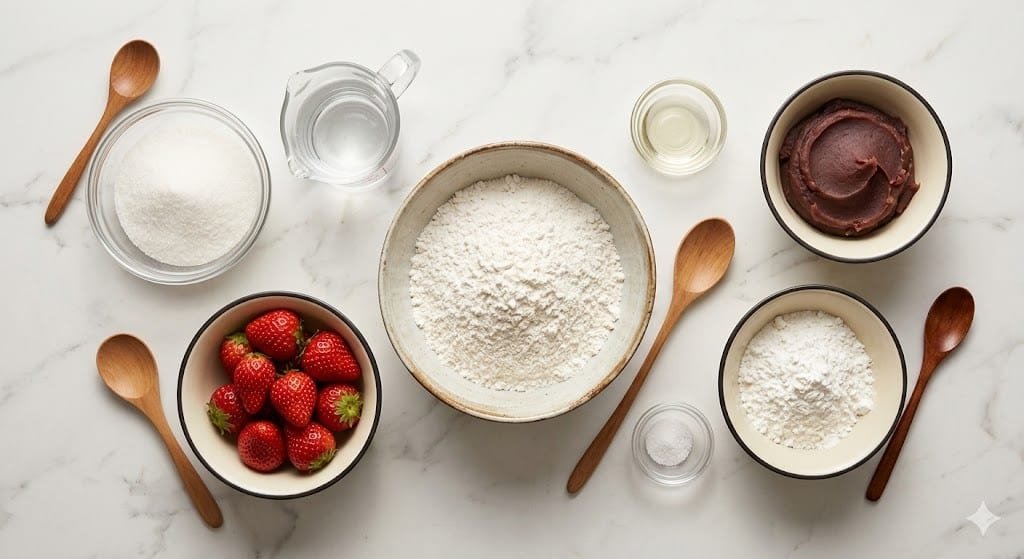
- 1 cup sweet rice flour (glutinous rice flour or mochiko; my grandma always swore by Koda Farms, but, honestly, I just use what’s cheapest at the shop)
- 3/4 cup water (I’ve 100% used tap when too lazy for filtered—no one’s ever noticed)
- 1/4 cup sugar (sometimes I use a tad less if my strawberries are super sweet)
- 8 fresh strawberries, medium-sized, hulled & patted dry (if they’re massive, cut ’em down a bit; I once used frozen and… nope, they just leak out everywhere)
- 1/3 cup sweetened red bean paste (anko) (optional, but my uncle won’t eat it without)
- Potato starch or cornstarch (for dusting, I alternate depending on the mood; both work, potato is a bit silkier I think)
How to Make Strawberry Mochi: My Not-So-Fancy Method
- First, wash and hull your strawberries (and dry them really well—mochi and wet fruit do not get along, trust me).
- If you’re going for the anko filling, wrap each dry strawberry with a thin layer of red bean paste, like a little jacket. Too much, and things get weirdly goopy.
- In a microwave-safe bowl (glass is easiest to clean), mix your sweet rice flour, sugar, and water. Whisk until pretty smooth—lumps are the enemy.
- Cover the bowl loosely with plastic wrap or a plate (I just drape a plate on top—saves plastic), and nuke it for 1 minute on high. Stir with a damp spatula—this is where I usually sneak a taste and burn my finger, not recommended.
- Give it another 1 minute zap, then stir again. By now, it’s gonna get sticky and slightly translucent. If not, repeat in 30-second bursts until you get there.
- Dust your countertop (or a big cutting board) generously with potato starch. Dump out the mochi blob (it’s a blob, that’s normal), sprinkle with more starch, and pat it gently into a rough rectangle—about 1/4 inch thick. Don’t overthink it if the shape is a bit wonky!
- Cut the mochi into 8 somewhat-equal squares using a greased knife (grease is essential here, unless you want mochi welded to your blade). I eyeball it—precision is for other days.
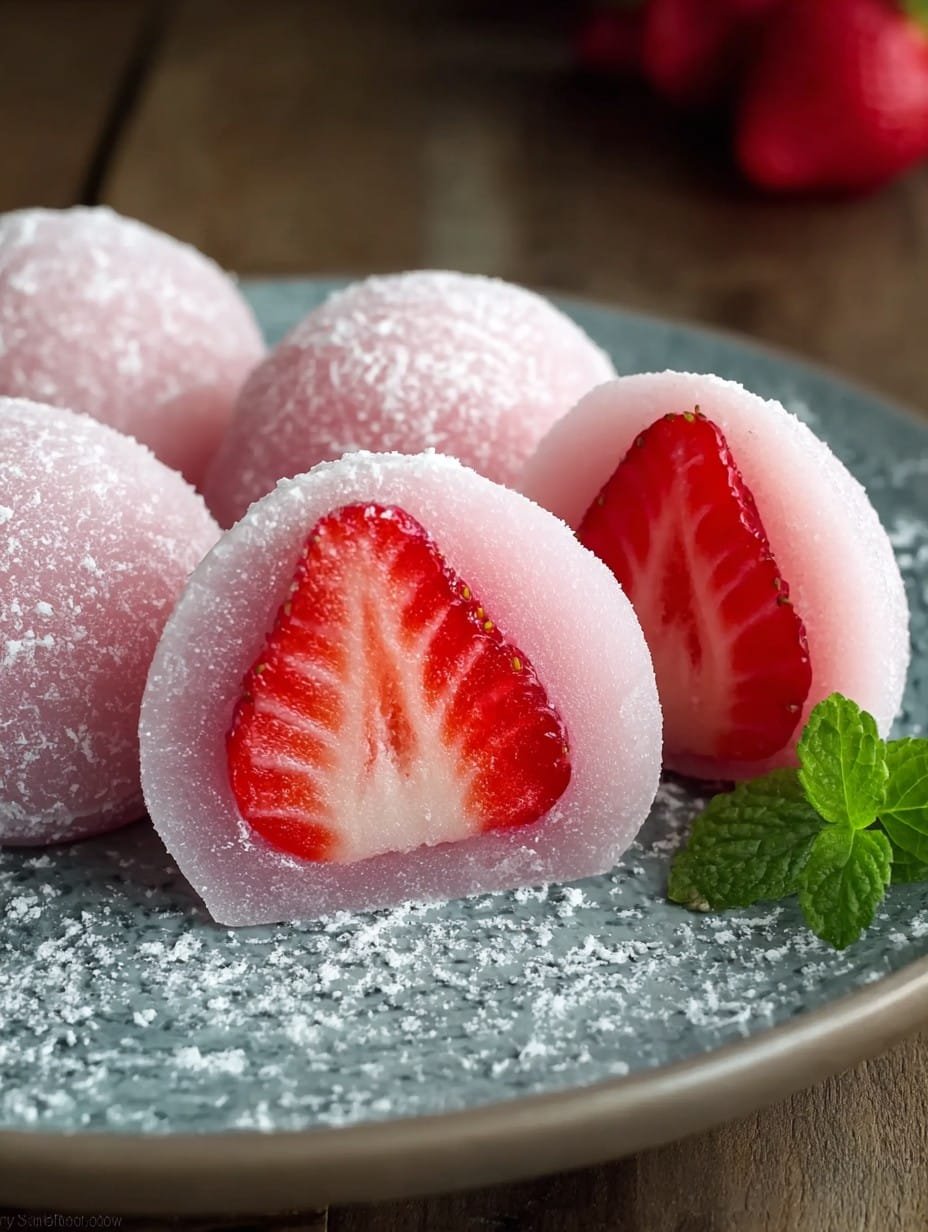
- Take a mochi square, dust off excess starch, and place your strawberry (bean paste and all, if you’re using it) in the center. Gently gather the edges and pinch to seal underneath. Don’t stress if they’re not perfect; rustic is in!
- Repeat with the rest, and let them sit for a few minutes (I swear they taste better if you can wait a bit… I rarely can).
Notes from Way Too Many Messy Tries
- Mochi gets tough in the fridge pretty quickly. I think it’s best on day one, shocker.
- If your mochi feels too sticky to roll, just add more starch—seriously, you can’t really overdo it.
- The plastic wrap trick in the microwave makes clean-up less of a horror show. Says the person who once spent 40 minutes scrubbing dried rice paste off her bowl.
If You Wanna Switch Things Up (Or, What I Did on a Whim)
- I’ve replaced strawberries with diced mango—surprisingly tasty, but a bit slippery.
- Tried stuffing with Nutella instead of red bean paste, but it kind of oozed out everywhere. Tastes unreal, but it’s a hot mess; maybe chill it first?
- Once, desperate for mochi and only had brown rice flour. Do not recommend. Texture was blah and not even the dog cared.
Do You Need Special Equipment?
- A microwave is easiest, but I’ve done this on the stovetop in a pinch—slow heat, stir until sticky. Y’know, arm workout bonus.
- I use a big glass bowl but any deep microwaveable thing’ll work.
- Damp spatula helps with sticking, but if all you’ve got is a wooden spoon, run it under water first. Life hack?
Keeping Mochi Fresh (Not That It’ll Last Long, Seriously)
- Cover any leftovers in cling wrap or stick in an airtight container. Room temp for a day is fine—fridge kind of toughens it though.
- Truthfully, in my house, the only time I have leftovers is when someone forgets one in the back of the fridge. Even then, they usually get eaten slightly chewy and all.
How I Serve Strawberry Mochi (With or Without Ceremony)
I serve these on a big wooden platter lined with parchment—mostly so nobody complains about them sticking together. Sometimes with matcha tea (which makes me feel like I’m much classier than I am) or just with a side of cold milk, because why not?
Pro Tips—A.K.A. What I Wish I’d Known
- Don’t try to rush the microwaving step. I got impatient and ended up with raw flour pockets inside—gross.
- Actually, I find it works better if you let the mochi cool just a bit before wrapping, otherwise it scalds like nobody’s business.
- I once tried freezing these… they turned into little rocks, so yeah—don’t.
Real Questions I’ve Actually Gotten (And My Honest Answers)
- Can I use regular rice flour? Nope, not for this. It won’t get chewy—trust me, I tried.
- Can I make it vegan? Actually, yes! This recipe already is, unless your red bean paste sneaks something in. Double check just in case.
- Why did my mochi split? Usually means your wrapper was too thin or the berries too juicy. Don’t stress—it still eats the same.
- Do I really need potato starch? Cornstarch will do in a pinch. Just don’t use flour; it gets kinda gummy.
- How do I stop sticking? All about that starch dusting—and wetting your hands. Or, honestly, enlist a friend with less sticky tendencies.
Oh, and—because someone always asks—yes, it’s supposed to look imperfect! If they’re all wonky but taste amazing, you win.
Ingredients
- 1 cup sweet rice flour (glutinous rice flour or mochiko; my grandma always swore by Koda Farms, but, honestly, I just use what’s cheapest at the shop)
- 3/4 cup water (I’ve 100% used tap when too lazy for filtered—no one’s ever noticed)
- 1/4 cup sugar (sometimes I use a tad less if my strawberries are super sweet)
- 8 fresh strawberries, medium-sized, hulled & patted dry (if they’re massive, cut ’em down a bit; I once used frozen and… nope, they just leak out everywhere)
- 1/3 cup sweetened red bean paste (anko) (optional, but my uncle won’t eat it without)
- Potato starch or cornstarch (for dusting, I alternate depending on the mood; both work, potato is a bit silkier I think)
Instructions
-
1First, wash and hull your strawberries (and dry them really well—mochi and wet fruit do not get along, trust me).
-
2If you’re going for the anko filling, wrap each dry strawberry with a thin layer of red bean paste, like a little jacket. Too much, and things get weirdly goopy.
-
3In a microwave-safe bowl (glass is easiest to clean), mix your sweet rice flour, sugar, and water. Whisk until pretty smooth—lumps are the enemy.
-
4Cover the bowl loosely with plastic wrap or a plate (I just drape a plate on top—saves plastic), and nuke it for 1 minute on high. Stir with a damp spatula—this is where I usually sneak a taste and burn my finger, not recommended.
-
5Give it another 1 minute zap, then stir again. By now, it’s gonna get sticky and slightly translucent. If not, repeat in 30-second bursts until you get there.
-
6Dust your countertop (or a big cutting board) generously with potato starch. Dump out the mochi blob (it’s a blob, that’s normal), sprinkle with more starch, and pat it gently into a rough rectangle—about 1/4 inch thick. Don’t overthink it if the shape is a bit wonky!
-
7Cut the mochi into 8 somewhat-equal squares using a greased knife (grease is essential here, unless you want mochi welded to your blade). I eyeball it—precision is for other days.
-
8Take a mochi square, dust off excess starch, and place your strawberry (bean paste and all, if you’re using it) in the center. Gently gather the edges and pinch to seal underneath. Don’t stress if they’re not perfect; rustic is in!
-
9Repeat with the rest, and let them sit for a few minutes (I swear they taste better if you can wait a bit… I rarely can).
Approximate Information for One Serving
Nutrition Disclaimers
Number of total servings shown is approximate. Actual number of servings will depend on your preferred portion sizes.
Nutritional values shown are general guidelines and reflect information for 1 serving using the ingredients listed, not including any optional ingredients. Actual macros may vary slightly depending on specific brands and types of ingredients used.
To determine the weight of one serving, prepare the recipe as instructed. Weigh the finished recipe, then divide the weight of the finished recipe (not including the weight of the container the food is in) by the desired number of servings. Result will be the weight of one serving.
Did you make this recipe?
Please consider Pinning it!