Let’s Chat About Sourdough Pizza Crust—My Very Favorite Friday Night Ritual
Alright, first things first: if you’ve never tried making your own pizza crust with sourdough starter, you’re in for a beautiful, slightly wild ride. I still remember the first time I gave this a go—my starter was a little unpredictable, flour ended up everywhere (certain relatives still talk about “the flour cloud of ‘19”), and the kitchen timer did not survive—but oh, was it worth it. Seriously, there’s something kinda magical about watching a rough, sticky dough turn into chewy, tangy pizza that tastes like you’ve stolen your local pizzeria’s secret recipe. If you can manage to not eat half the crust straight off the tray, you’re made of stronger stuff than I am.
Why You’ll Love This—According to My Family and My Stomach
I make this whenever I need to feel like a kitchen magician—but also to clear out the veggie drawer, be honest. My family goes a bit nuts for the chew and those crispy, charred little bubbles (and yes, sometimes the edges get a touch too done, but I just call that rustic). This crust is the only thing that gets my kids to voluntarily eat veggies—well, besides bribery. Sometimes, if the week’s been rough, I’ll double the recipe and stash extra dough in the fridge so I can make pizza two days in a row. (No shame. At all.)
Here’s What You Need (With a Few Swaps)
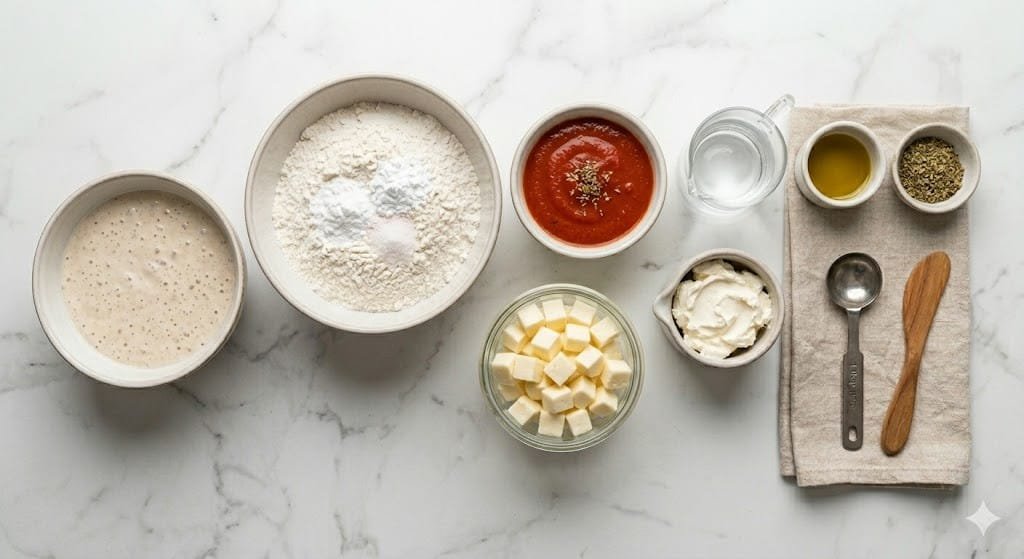
- 1 cup (about 225g) active sourdough starter (fed and bubbly is best, but I’ve used it a bit sleepy and nothing exploded)
- 2 1/2 cups (320g) bread flour (all-purpose works fine if that’s what’s in the cupboard—my gran always used Gold Medal, but honestly, any will do)
- 1 cup (240ml) lukewarm water (I totally just use tap water; I’ve yet to notice the difference)
- 2 tablespoons olive oil (sometimes I swap in melted butter if I’m feeling fancy or out of olive oil, which happens more than I’d admit)
- 1 1/4 teaspoons salt (I’ve tried less; don’t—it’s bland—more is ok but go slow)
- Semolina or cornmeal (handful, for dusting; all-purpose flour if you’re totally out)
How to Make This Sourdough Pizza Crust—Let’s Do This!
- Mix the starter, water, and olive oil in a big bowl. Add the flour and salt. Stir until you get a shaggy, sticky mess—don’t stress, this always looks odd.
- Let the dough rest (aka “autolyse”—but around here it’s also the perfect moment to drink coffee) for 30 minutes, covered up.
- Give the dough a few stretch-and-folds: grab an edge, pull up, fold over, rotate, and repeat four-ish times. Don’t bother counting exactly. Cover again and let it hang out at warm-ish room temp for 4 to 6 hours, till it’s puffy and just about doubled. (Colder days, longer rise; summer, things get wild fast.)
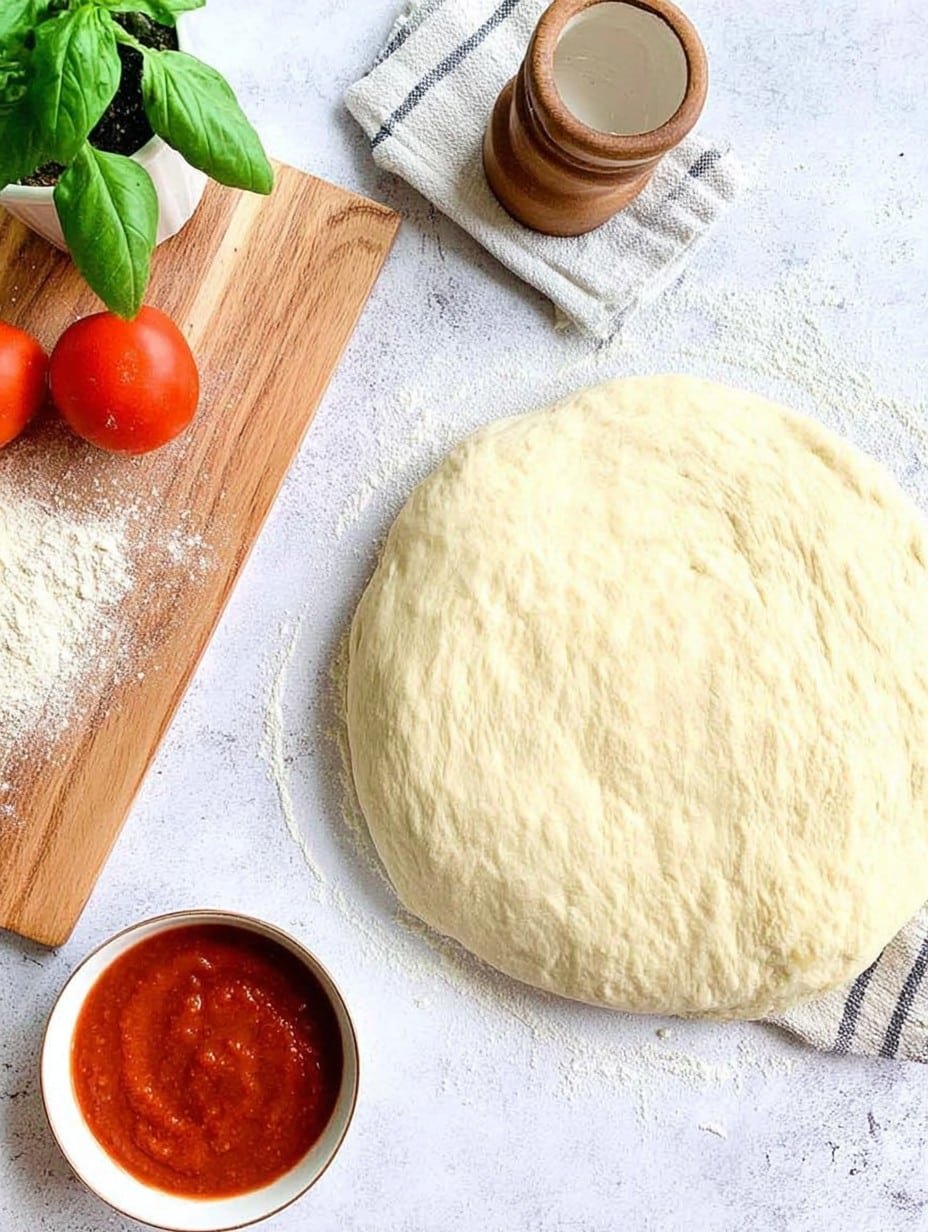
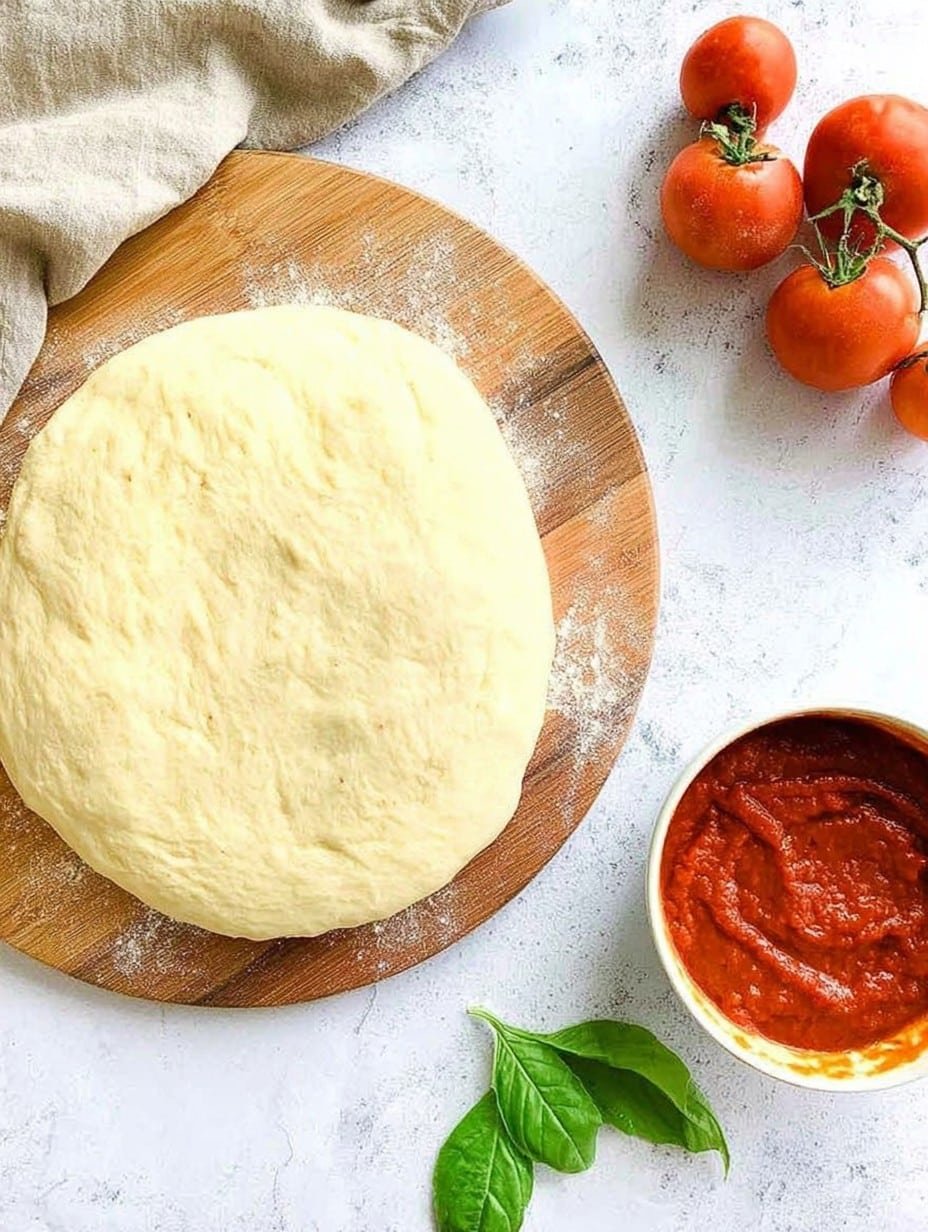
- Plop dough onto a floured countertop. Don’t fight its stickiness; just use plenty of dusting. Divide in half for two smaller pizzas or keep it whole for one big guy.
- Shape each piece into a blobby round. Pop onto a baking sheet coated with semolina (or cornmeal, or just more flour), cover, and let it chill out another hour. This nap helps with flavor and makes stretching way easier.
- Preheat oven to a blazing-hot 500F/260C, if you can—pizzas like it wild. If you’ve got a pizza stone, now’s the time; if not, a heavy sheet pan turned upside down works (it’s what I did for years).
- Stretch dough by hand into your best pizza shape. Mine are usually somewhere between “oval” and “questionable Europe map.” Don’t stress holes, just patch them up.
- Add toppings. I usually sneak a spoonful of sauce at this point and get caught every time. Don’t overload—the crust really wants to shine.
- Bake 10–13 minutes till the crust sings (crispy edges, golden in the middle). If you want more color, broil for a minute—just watch it like a hawk. Cool briefly, then slice.
My Notes—Things I’ve Fouled Up So You (Maybe) Don’t Have To
- I once let the dough rise overnight on a super warm night…and woke up to what looked like sourdough lava trying to escape the bowl. Lesson learned: pay attention to your room temp.
- If the crust seems tough, I probably added too much flour getting it off my hands—try to stay light handed with the dusting.
- Don’t skip the second rest (I used to), but honestly, it makes life easier for stretching. The dough’s just less clingy to your knuckles.
Some Crust Experiments—And an Admission
- I tried adding a spoonful of honey once—every bite tasted slightly sweet and weirdly cake-like, so…not my favorite. But hey, maybe you’ll love it.
- Swapped part of the bread flour out for whole wheat. Decent, hearty, but made the texture a bit tough (best to start with just 1/4 cup whole wheat if you’re curious).
- Once tossed in chopped rosemary before the first rise—wow, it made the whole kitchen smell like an Italian garden. Highly recommend.
Equipment—And No, You Don’t Need a Peel
- Big bowl (big enough for sticky dough to expand; plastic or glass, whatever)
- Sturdy spatula or a wooden spoon
- Baking sheet (flipped over for that faux pizza stone trick)
- Pizza stone—if you have one. I do, but almost always just use the back of an old tray
- If you don’t have a rolling pin, just use a wine bottle (have done this dozens of times!)
Storing Leftover Pizza (Hypothetically)
This holds up in the fridge, wrapped in foil or stuffed in a food bag, for 2 to 3 days—though honestly, in my house it never lasts more than a day! The crust gets chewier, which I weirdly love. I’ve also frozen baked crusts (with nothing on them) for a lazy night, and it actually works better than I expected.
How We Actually Eat This—Not Just a Slice
Sometimes we make a “build your own night,” which is maybe just a sneaky tactic to avoid complaints about toppings. On game days, everyone grabs slices straight from the rack, and yes, dipping crust in garlic butter is practically law here. Once, and only once, I tried drizzling honey over pepperoni pizza—reckon the kids are still suspicious of sweet pizza to this day.
The Pro Tips I Learned the (Sort of) Hard Way
- I once tried skipping the initial dough rest, thinking I was saving time. Didn’t help; the dough was tough as old boots.
- Don’t over-sauce, or you’ll end up with a soggy middle. Did this twice before finally believing it.
- Actually, letting the dough chill in the fridge overnight gives an even tangier flavor—if you remember in time.
FAQ—Because People Have Actually Asked Me
- What if my starter’s not super bubbly? I’ve used it when it’s a bit sleepy. The rise is slower, but the crust still bakes up fine. You might just need an extra hour or so.
- Is bread flour really necessary? Eh, I’ve used all-purpose in a pinch. Bread flour gives more chew, but don’t let the lack stop your pizza plans. You’ll still get great flavor.
- Can I freeze the dough? Yup! I press it out slightly, wrap it up, and freeze. Thaws overnight in the fridge, then proceed as usual. Sourdough is surprisingly resilient.
- How do you get those big bubbles? Don’t overwork the dough before shaping, and resist poking at it too much once you’ve stretched it out. Sometimes it just comes down to how feisty the starter is that day, if I’m honest.
- Can this be grilled outdoors? Absolutely! I’ve done it on a hot gas grill (with supervision). Prepare for slightly charred bottoms—and avoid being downwind if it’s breezy!
- Do I really need semolina or cornmeal? Nah, it helps with sliding the pizza off but isn’t critical; a dusting of flour works. I forget it half the time and we still eat well.
And that’s basically everything! If you ever find yourself with more pizza than friends, call me. Or don’t—means more leftovers for you.
Ingredients
- 1 cup (about 225g) active sourdough starter (fed and bubbly is best, but I’ve used it a bit sleepy and nothing exploded)
- 2 1/2 cups (320g) bread flour (all-purpose works fine if that’s what’s in the cupboard—my gran always used Gold Medal, but honestly, any will do)
- 1 cup (240ml) lukewarm water (I totally just use tap water; I’ve yet to notice the difference)
- 2 tablespoons olive oil (sometimes I swap in melted butter if I’m feeling fancy or out of olive oil, which happens more than I’d admit)
- 1 1/4 teaspoons salt (I’ve tried less; don’t—it’s bland—more is ok but go slow)
- Semolina or cornmeal (handful, for dusting; all-purpose flour if you’re totally out)
Instructions
-
1Mix the starter, water, and olive oil in a big bowl. Add the flour and salt. Stir until you get a shaggy, sticky mess—don’t stress, this always looks odd.
-
2Let the dough rest (aka “autolyse”—but around here it’s also the perfect moment to drink coffee) for 30 minutes, covered up.
-
3Give the dough a few stretch-and-folds: grab an edge, pull up, fold over, rotate, and repeat four-ish times. Don’t bother counting exactly. Cover again and let it hang out at warm-ish room temp for 4 to 6 hours, till it’s puffy and just about doubled. (Colder days, longer rise; summer, things get wild fast.)
-
4Plop dough onto a floured countertop. Don’t fight its stickiness; just use plenty of dusting. Divide in half for two smaller pizzas or keep it whole for one big guy.
-
5Shape each piece into a blobby round. Pop onto a baking sheet coated with semolina (or cornmeal, or just more flour), cover, and let it chill out another hour. This nap helps with flavor and makes stretching way easier.
-
6Preheat oven to a blazing-hot 500F/260C, if you can—pizzas like it wild. If you’ve got a pizza stone, now’s the time; if not, a heavy sheet pan turned upside down works (it’s what I did for years).
-
7Stretch dough by hand into your best pizza shape. Mine are usually somewhere between “oval” and “questionable Europe map.” Don’t stress holes, just patch them up.
-
8Add toppings. I usually sneak a spoonful of sauce at this point and get caught every time. Don’t overload—the crust really wants to shine.
-
9Bake 10–13 minutes till the crust sings (crispy edges, golden in the middle). If you want more color, broil for a minute—just watch it like a hawk. Cool briefly, then slice.
Approximate Information for One Serving
Nutrition Disclaimers
Number of total servings shown is approximate. Actual number of servings will depend on your preferred portion sizes.
Nutritional values shown are general guidelines and reflect information for 1 serving using the ingredients listed, not including any optional ingredients. Actual macros may vary slightly depending on specific brands and types of ingredients used.
To determine the weight of one serving, prepare the recipe as instructed. Weigh the finished recipe, then divide the weight of the finished recipe (not including the weight of the container the food is in) by the desired number of servings. Result will be the weight of one serving.
Did you make this recipe?
Please consider Pinning it!