So here’s why I keep coming back to this
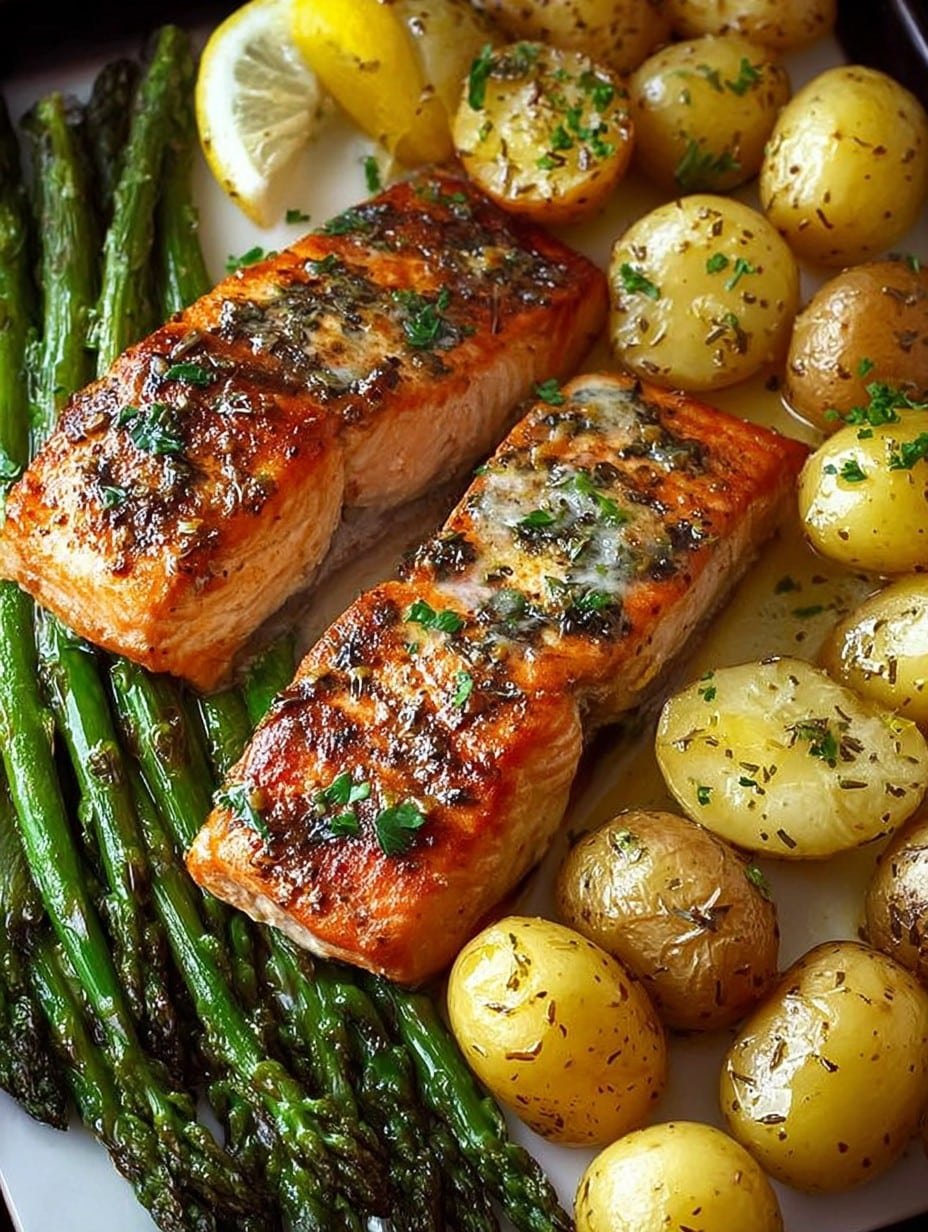
You know how some weeks you stare into the fridge, trying to telepathically will dinner into existence? Yeah, this is my answer for those nights. I started making baked salmon with potatoes and asparagus on a total whim during a soggy Tuesday last March (or was it April? Either way, the week was definitely in need of a pick-me-up). I’d just gotten my hands on an absolutely massive fillet—think “will not fit in any of my pans” territory—and a bundle of asparagus that looked like it was about to start walking off if I didn’t use it soon. Fast forward: my family devours it, not a scrap left. Now, if I so much as hint at fish for dinner, this is what they beg for. Unless I forgot the potatoes, but, erm, don’t get me started on that one.
Why you’ll probably go bonkers for this
I make this whenever I need real, actual food but have about a squirrel’s amount of energy left after work. It pretty much cooks itself (I mean, close enough)—and my family goes nuts for it, especially because you can get away with only one baking pan to wash. I had a time last summer where I ran out of fresh lemon and subbed in bottled. Didn’t hear a peep of complaint. If your crew likes things more zesty, just throw in a few extra lemon wedges. Or don’t—mine are fussy about citrus if the mood strikes. (Once I tried it with sweet potato instead of regular, and honestly? It turned out a bit odd, but it did look cheerful.)
What you’ll need (with my lazy swaps)
- 2 salmon fillets (mine are usually about 150g each – but I just eyeball it, really)
- 4 medium potatoes, sliced into wedges (I sometimes use those mini new potatoes if I can’t be bothered with peeling, and my gran swore by Maris Piper but use whatever you dig up, no judgment)
- 1 bunch asparagus (about 200g, the skinny stalks cook faster but fatter ones are fine—just chop ‘em smaller)
- 2 tbsp olive oil (or just a healthy splash, sometimes my glug is more generous than other days)
- 1 lemon, zested & cut into wedges (or, like I did once, a couple teaspoons of bottled lemon juice if that’s all I had left)
- 2 garlic cloves, minced or even smashed whole if you’re in a rush
- Salt & pepper to taste (I once used smoked sea salt and… wow)
- Fresh or dried herbs: dill is classic, but I love thyme—it just smells so good cooking. Rosemary if you’re feeling fancy
Let’s get this in the oven, shall we?
- Pop the oven on to 200°C (that’s about 400°F if you’re across the pond). I sometimes forget this until the end and then have to wait, so maybe start early?
- Slice up your potatoes into nice chunky wedges. Chuck them into a big bowl, toss with half the olive oil, and some salt, pepper, and one clove of that garlic. Spread ’em out on a baking tray—you want them all cozy but not stacked up.
- Bake those potatoes for about 15-20 minutes. (This is when I usually make myself a cup of tea, sometimes forgetting I started it in the first place, but that’s optional.)
- Next, shove the asparagus and salmon onto the same tray. Tuck the salmon fillets in amongst the wedges and put asparagus around them, drizzle everything with the rest of the olive oil, add more salt & pepper, toss some lemon zest and juice on top. Sprinkle over your herbs, or just a mad handful if you’re like me and love the green.
- Back into the oven for about 15 more minutes, give or take, until the salmon flakes with a fork and the asparagus is just tender. (Don’t freak out if the salmon looks weird halfway thru—it sorts itself out by the end. And yes, this is usually where I sneak a crispy potato wedge… strictly for quality control.)
- Squeeze the baked lemon over everything at the end. Serve right from the tray—less washing up = more happiness, in my book.
Bits and bobs I’ve learned the hard way
- Potatoes cut too thick? They’ll take ages. I’ve run out of patience and just microwaved them for 2 minutes before baking. Worked like a charm.
- Sometimes the asparagus goes a funny color if it’s too close to the edges. Doesn’t matter, still tastes good.
- I tried one time adding cherry tomatoes; lovely burst of color, but my husband doesn’t trust a tomato bigger than a pea. Go figure.
- If you run out of parchment, just rub oil straight onto the tray. A quick soak afterward does the trick.
Variations I’ve fiddled with (some winners, some not so much)
- Did it with cod instead of salmon—good, but a little less buttery. Add a dab of butter to the fillet, boom, magic.
- Tried swapping asparagus for green beans when the store ran out. Wasn’t half bad, just cooked a bit longer.
- Don’t do sweet potatoes unless you want your salmon tasting weirdly like Thanksgiving. Live and learn, right?
Favourite tool? And how you can totally do without it
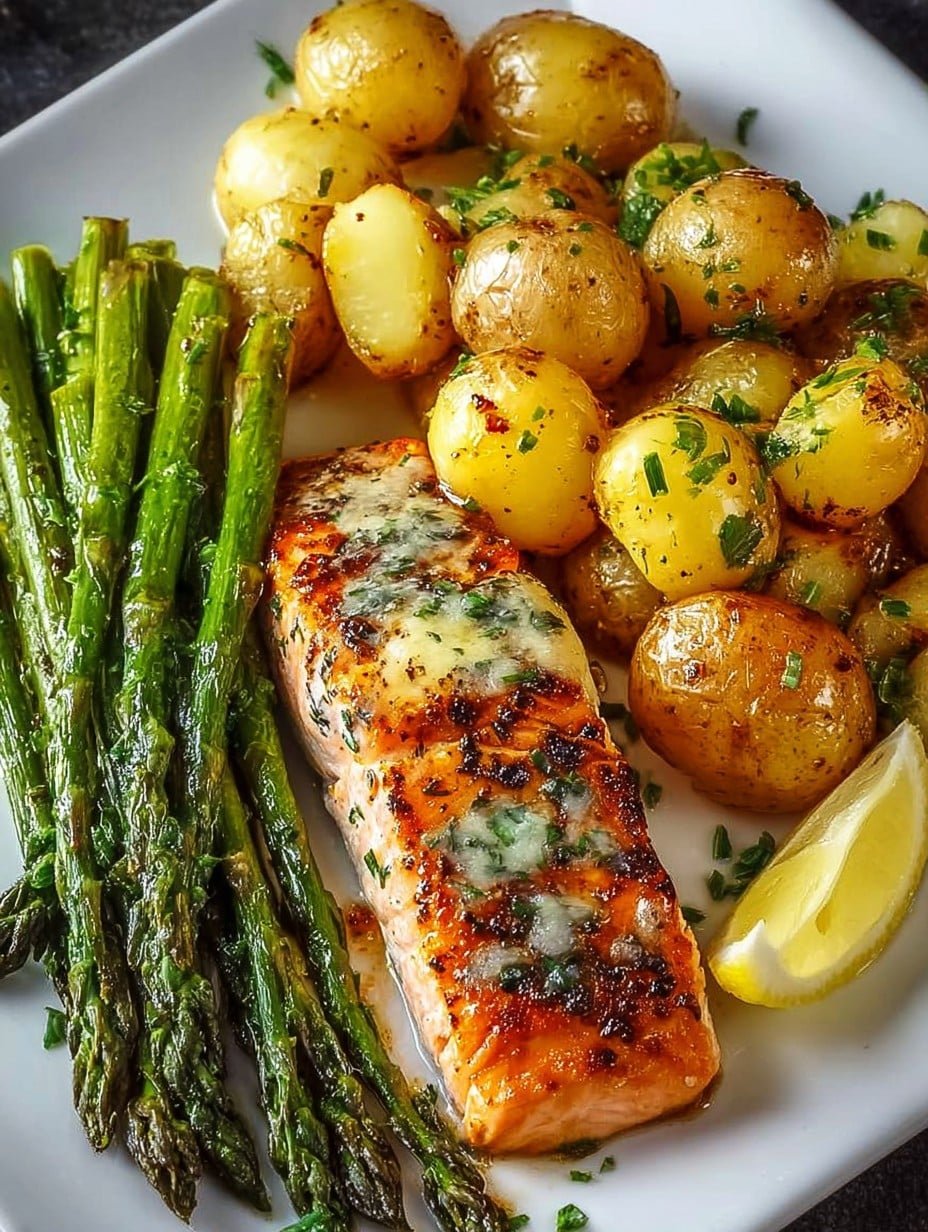
I use a big old sheet pan—rectangle, slightly warped from years of use. If all you’ve got is a roasting dish, just pile things in, maybe swap trays halfway so it cooks even. If you’ve only got a weird small pan, batch it out. Or borrow from a neighbor, that’s what I did before I finally bought a decent one!
Keeping leftovers (not that we ever have any)
Supposedly this keeps in the fridge for up to 2 days in a tight box. I think this tastes even better the next day—though honestly, in my house it never lasts more than a day! One time I tried freezing a portion… came out a bit sad and mushy. Probably best not to bother.
How we dig in at my place
We usually plop the tray in the middle of the table (less washing up!), squeeze over extra lemon, and everyone grabs what they like. A quick side salad or some fresh bread sometimes happens, but more often than not it’s just a fork in one hand, a chat in the other. My youngest dunks his potatoes in ketchup, which on one level offends me, but hey—family, right?
Pro tips I’ve learned through minor disasters
- Don’t rush the potato part. I once tried cramming all veg in at once to save time, ended up with salmon mush and raw potatoes. Patience actually pays off here.
- Watch for paper-thin asparagus at the shop; they burn up real quick. Better to go with the chunky stalks if you can.
- Actually, brushing the salmon with a little mustard before baking (just a whisper) adds a nice kick. I only figured this out after a friend suggested it—cheers, Sally.
Folks always ask me…
- Can I use frozen salmon?
- Yep! Just defrost in the fridge overnight if you can. I tried baking straight from frozen once, and it was… uneven. So, do thaw if you’ve got the time.
- What if my asparagus is looking sad?
- No worries, just snap off the woody ends and if it’s really gnarly, slice the rest up small. Or swap for green beans, I won’t tell.
- Crispy potatoes, please?
- I feel you! The trick is not to crowd the tray, and turn ‘em once halfway through. And maybe an extra drizzle of oil for luck.
- Lemon too strong?
- Fair point. Just skip the zest, use a light squeeze at the end. Or leave it out entirely if you’re not into tangy things.
- Do I have to peel the potatoes?
- I rarely bother unless they’re gnarly-looking. Skins add texture, plus it’s less faff.
And there you have it—this is the wonky, lovely, easy baked salmon with potatoes and asparagus healthy recipe we lean on at my house. Give it a go, and let me know if you somehow manage to have leftovers, because, well, I’d like to know your secret.
Ingredients
- 4 salmon fillets (about 6 oz each)
- 1 lb baby potatoes, halved
- 1 lb asparagus, trimmed
- 2 tablespoons olive oil
- 1 teaspoon garlic powder
- 1 teaspoon dried thyme
- Salt and black pepper to taste
- 1 lemon, sliced
Instructions
-
1Preheat the oven to 400°F (200°C). Line a large baking sheet with parchment paper.
-
2In a bowl, toss the halved baby potatoes with 1 tablespoon olive oil, garlic powder, dried thyme, salt, and pepper. Spread potatoes on the baking sheet and roast for 10 minutes.
-
3Remove the baking sheet and add asparagus to one side. Drizzle with remaining olive oil and season with salt and pepper.
-
4Nestle the salmon fillets among the vegetables and season them with salt, pepper, and lemon slices on top.
-
5Return the baking sheet to the oven and bake for another 15 minutes, or until the salmon is cooked through and the potatoes are tender.
-
6Serve warm, garnished with extra lemon slices if desired.
Approximate Information for One Serving
Nutrition Disclaimers
Number of total servings shown is approximate. Actual number of servings will depend on your preferred portion sizes.
Nutritional values shown are general guidelines and reflect information for 1 serving using the ingredients listed, not including any optional ingredients. Actual macros may vary slightly depending on specific brands and types of ingredients used.
To determine the weight of one serving, prepare the recipe as instructed. Weigh the finished recipe, then divide the weight of the finished recipe (not including the weight of the container the food is in) by the desired number of servings. Result will be the weight of one serving.
Did you make this recipe?
Please consider Pinning it!!